

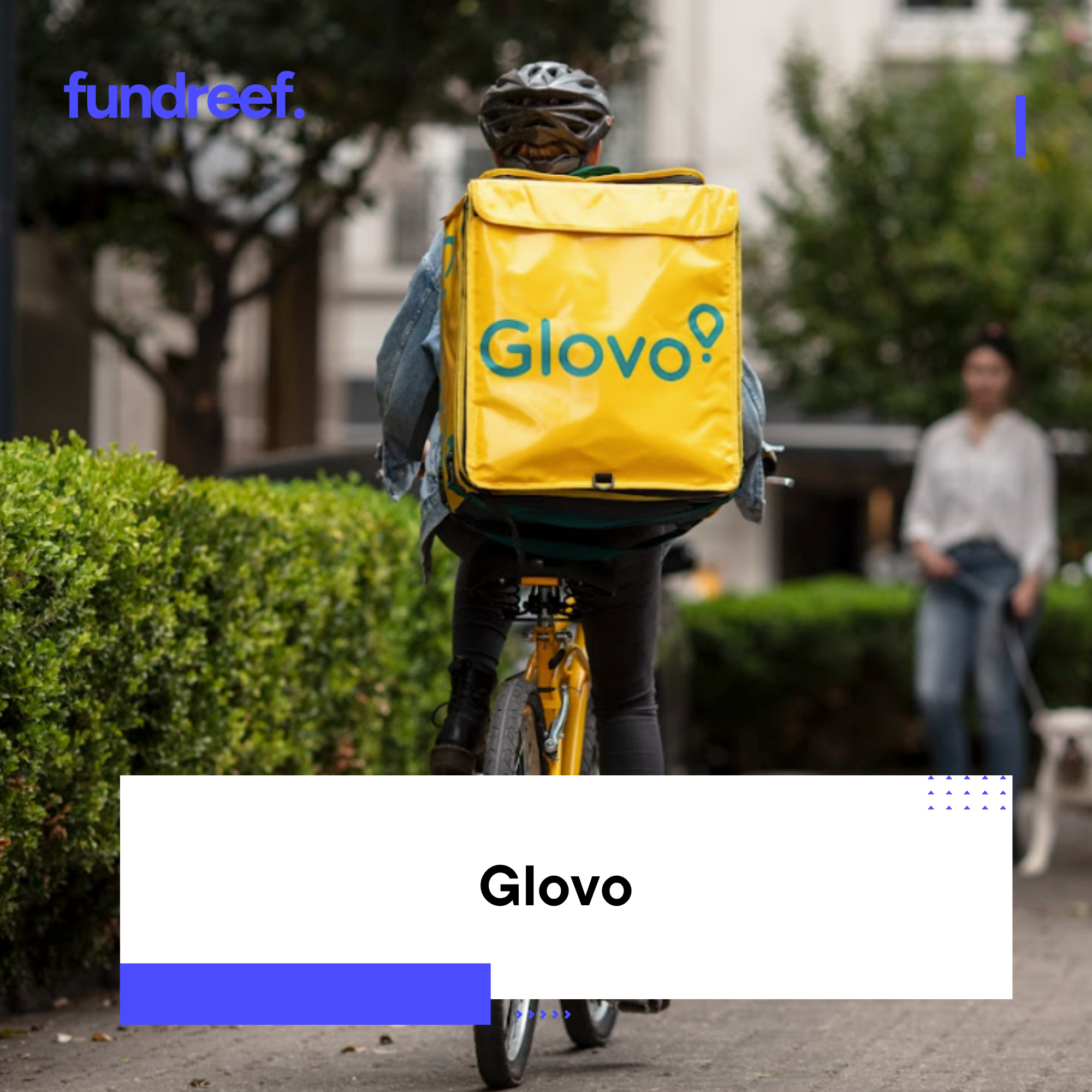
The early funding story behind one of Spain’s most successful startups — from pre-seed survival to becoming the country’s most-funded tech company.
In 2014, Oscar Pierre was 21 years old, had just dropped out of a US university exchange program, and had an idea: a single app that could deliver anything in a city within an hour. His co-founder Sasha Michaud was 35, a serial entrepreneur who had already built and sold companies. Together they founded Glovo in Barcelona in January 2015 with almost no capital and a product that was essentially a courier dispatcher disguised as a technology startup.
By March 2021, Glovo raised €450M in a Series F — the largest funding round in Spanish startup history. The distance between those two points is one of the most instructive fundraising journeys in Southern European tech.
Table of Contents
- The Founding: Barcelona’s Startup Scene in 2015
- The Pre-Seed: Antai Venture Builder and Survival Capital
- The Series A: €5M and the Proof-of-Concept Phase
- Scaling Rounds: From Series B to Series E
- The €450M Series F: Spain’s Biggest Startup Round
- What Glovo’s Fundraising Teaches Southern European Founders
- Frequently Asked Questions
The Founding: Barcelona’s Startup Scene in 2015
Barcelona in 2015 was a different startup city from the one it is today. The Mobile World Congress had begun attracting tech investment to the city, Cabify was the most recognized local tech company, and the Antai Venture Builder — a local incubator and early-stage investor — was one of the very few institutional players willing to back pre-product consumer internet ideas.
Oscar Pierre’s original pitch was straightforward: Barcelona had dense urban neighborhoods, warm weather, and a culture of ordering from local businesses that predated food delivery apps. The challenge wasn’t convincing consumers to order — it was convincing investors that a logistics play built on freelance couriers in Spain could become a scalable technology business.
Pierre’s youth was initially a liability in fundraising conversations. He lacked the typical founder profile that institutional investors backed in 2015 — he had no prior exits, no track record, and no Stanford or MIT credential to substitute for it. What he had was relentless energy, a concrete product vision, and a co-founder in Michaud who provided the operational credibility that Pierre couldn’t yet claim.
The Pre-Seed: Antai Venture Builder and Survival Capital
Glovo’s first institutional backing came from Antai Venture Builder, the Barcelona-based startup studio that also backed Wallapop and other early Spanish tech companies. The pre-seed funding — details were never publicly disclosed but estimated at under €500K — gave Glovo enough runway to build its MVP and prove that the delivery model worked in one city before attempting to expand.
The Antai relationship was foundational for more than just the capital. It provided office space, operational support, and — critically — introductions to the small network of Spanish angel investors and seed funds that made up Barcelona’s early-stage ecosystem in 2015. In a market where warm introductions were the primary gateway to any investor conversation, being an Antai company was a credibility signal that opened doors which would otherwise have been closed to a 21-year-old first-time founder.
Glovo launched publicly in February 2015 and within months was processing orders across multiple Barcelona neighborhoods. The early product was deliberately scrappy — couriers were recruited through WhatsApp, orders were dispatched manually before the algorithm was built, and customer service was handled personally by the founding team. The priority wasn’t perfection; it was demonstrating that people would pay for the service and that couriers would show up.
The Series A: €5M and the Proof-of-Concept Phase
In August 2016 — 18 months after launch — Glovo closed a €5M Series A led by Antai, with participation from Seaya Ventures, Entreé Capital, Caixa Capital Risk, and Bonsai Venture Capital. The round was covered by TechCrunch, marking Glovo’s first major international press coverage and establishing it as the most-funded delivery startup in Spain.
The investors in this round tell an important story about how Southern European fundraising worked in 2016. Seaya Ventures was the most established Spanish consumer tech fund; Entreé Capital was an Israeli fund with strong consumer internet conviction; Caixa Capital Risk was the corporate VC arm of CaixaBank, one of Spain’s largest financial institutions. No global tier-1 fund was involved — Glovo was still an entirely regional story.
The Series A pitch centered on three proof points: Barcelona market penetration (Glovo was handling hundreds of orders daily and growing), repeat usage rates (customers were ordering multiple times per week, validating the habit-forming nature of the product), and the expansion opportunity (the on-demand delivery model was working in London and New York; no dominant player yet existed in Southern Europe).
The use of funds was aggressive: simultaneously launch in Madrid, expand the courier network, and build the technology infrastructure that would allow operations to scale without adding headcount proportionally. Eighteen months into its existence, Glovo had effectively run a Series A fundraising process that would have been considered a seed round in London or Berlin — a reflection of the stage of development of the Spanish ecosystem in 2016.
Scaling Rounds: From Series B to Series E
| Round | Year | Amount | Lead Investor | Key Milestone |
|---|---|---|---|---|
| Series B | 2017 | €30M | Rakuten, Cathay Innovation | Expansion to Italy, Portugal, Turkey |
| Series C | 2018 | €115M | Delivery Hero | Delivery Hero strategic investment |
| Series D | 2019 | €150M | Lakestar | Expansion to 20+ countries |
| Series E | 2019 | €160M | Drake Enterprises | South America, Africa push |
| Series F | 2021 | €450M | Lugard Road Capital, Luxor Capital | Q-commerce pivot |
The Series B in 2017 marked Glovo’s first international institutional investor — Rakuten, the Japanese e-commerce giant, which brought both capital and strategic context around marketplace and delivery economics in Asian markets. Cathay Innovation, the Franco-Chinese fund, joined as Glovo’s connection to the French and international growth-stage ecosystem.
The pivotal moment in Glovo’s fundraising history was the Delivery Hero investment in Series C. Delivery Hero — the German food delivery giant listed on the Frankfurt Stock Exchange — became a strategic investor and eventual near-majority shareholder. This relationship provided Glovo with operational knowledge, market intelligence from Delivery Hero’s global network, and a credibility signal to other institutional investors that made subsequent rounds significantly easier to close.
The Lakestar-led Series D in April 2019 brought Glovo’s total funding past €300M and was used to accelerate expansion into markets that larger competitors had ignored — Kenya, Peru, Ukraine, and other territories where Uber Eats and Deliveroo hadn’t yet established dominant positions. This deliberate geographic contrarianism — going where the giants weren’t — became a defining feature of Glovo’s competitive strategy.
The €450M Series F: Spain’s Biggest Startup Round
The March 2021 Series F was a landmark moment for the Spanish startup ecosystem. €450M ($528M) led by Lugard Road Capital and Luxor Capital Group, with participation from Delivery Hero, Drake Enterprises, and GP Bullhound — Glovo’s total funding crossed €900M, making it the most-funded Spanish startup in history.
The timing was deliberately aligned with the explosion of Q-commerce — the emerging category of 10–15 minute grocery delivery that became a global obsession during the COVID-19 period. Getir, Gorillas, and Flink had raised hundreds of millions in European markets, and Glovo needed the capital to respond with its own dark store network across its 20 operating markets.
The investor composition had shifted dramatically from the Series A. No longer a regional Spanish story, Glovo was now attracting US-based capital allocators who saw a well-positioned Southern European and EEMEA delivery network as an infrastructure play on the broader Q-commerce wave. Lugard Road Capital and Luxor Group — both New York-based alternative asset managers — brought the institutional credibility of transatlantic capital that few Spanish startups had achieved.
In November 2022, Delivery Hero agreed to acquire Glovo for €2.3B, in what became the largest acquisition of a Spanish tech startup. The outcome validated every investor from Antai’s pre-seed participation through the Luxor-led Series F — a clean exit from a company that had navigated six rounds, a global pandemic, and an intensely competitive market to achieve a European exit at scale.
What Glovo’s Fundraising Teaches Southern European Founders
Several specific lessons from Glovo’s journey apply directly to founders building in Barcelona, Madrid, Lisbon, or other Southern European markets:
Start with the right local incubator. Antai Venture Builder didn’t just provide capital — it provided the network that made the Series A possible. In markets where warm introductions are essential, the right institutional backer at pre-seed is worth far more than a slightly higher valuation from an investor with no local connections.
Build your competitive differentiation into your geographic strategy. Glovo’s decision to enter markets that Uber Eats and Deliveroo were ignoring wasn’t a consolation strategy — it was a deliberate moat. In Southern Europe and EEMEA, Glovo became the established player before global competitors arrived. Founders in smaller markets can replicate this logic: build a position in markets where you can win before expanding into markets where you’d be fighting incumbents.
Use strategic corporate investors carefully but deliberately. The Delivery Hero investment changed Glovo’s capital trajectory. Corporate strategic investors bring operational knowledge and market access that purely financial VCs can’t provide — but they also bring acquisition optionality that shapes the company’s eventual exit path. Glovo’s acquisition by Delivery Hero was, in one sense, a direct outcome of that early strategic relationship.
Grow your investor geography with your business geography. Glovo’s investor base evolved from local Spanish funds to European growth VCs to US capital allocators in parallel with its expansion from Barcelona to 20+ countries. Targeting investors whose geographic mandate matches your current and near-term expansion stage is more effective than going straight to global tier-1 funds before you have the scale to justify their attention.
When you’re building your investor list as a Southern European or CEE founder, Fundreefhelps you identify which international funds have recently deployed in your region — filtering by geography and recent investment activity removes the guesswork around which global funds are actually active in your market versus those that describe themselves as European investors but haven’t written a check outside London.
Suggested Visuals
- Graphic 1: Glovo funding timeline — round sizes and cumulative total from pre-seed to Series F acquisition
- Graphic 2: Geographic expansion map — markets entered by round and year
- Graphic 3: Investor evolution — from local Spanish funds to transatlantic capital allocators
Frequently Asked Questions About Glovo’s Fundraising
Who funded Glovo at the seed stage?
Glovo’s initial institutional backer was Antai Venture Builder, a Barcelona-based startup studio that provided pre-seed capital, office space, and network access. The formal Series A in August 2016 brought in Seaya Ventures, Entreé Capital, Caixa Capital Risk, and Bonsai Venture Capital for a total of €5M — a round that by Western European standards would have been classified as seed.
How did Glovo differentiate itself from larger delivery competitors?
Glovo’s core differentiation was geographic: it deliberately entered markets that Uber Eats, Deliveroo, and JustEat had not yet prioritized — Southern Europe, Eastern Europe, Africa, and Latin America. In those markets, it became the established player before global competitors arrived with superior capital. Its multi-category model — delivering not just food but anything from pharmacies, supermarkets, and retail stores — also created a broader use case than pure food delivery competitors.
How much did Delivery Hero pay to acquire Glovo?
Delivery Hero agreed to acquire Glovo for approximately €2.3 billion in November 2022. The deal represented the largest acquisition of a Spanish tech startup at that point in time and gave Delivery Hero full control of a company it had been strategically investing in since the 2018 Series C round.
What was the total amount raised by Glovo before its acquisition?
Glovo raised over €900M in total funding before being acquired by Delivery Hero. The Series F in March 2021 brought cumulative funding to that milestone, with the €450M single round representing the largest VC raise in Spanish startup history.
