

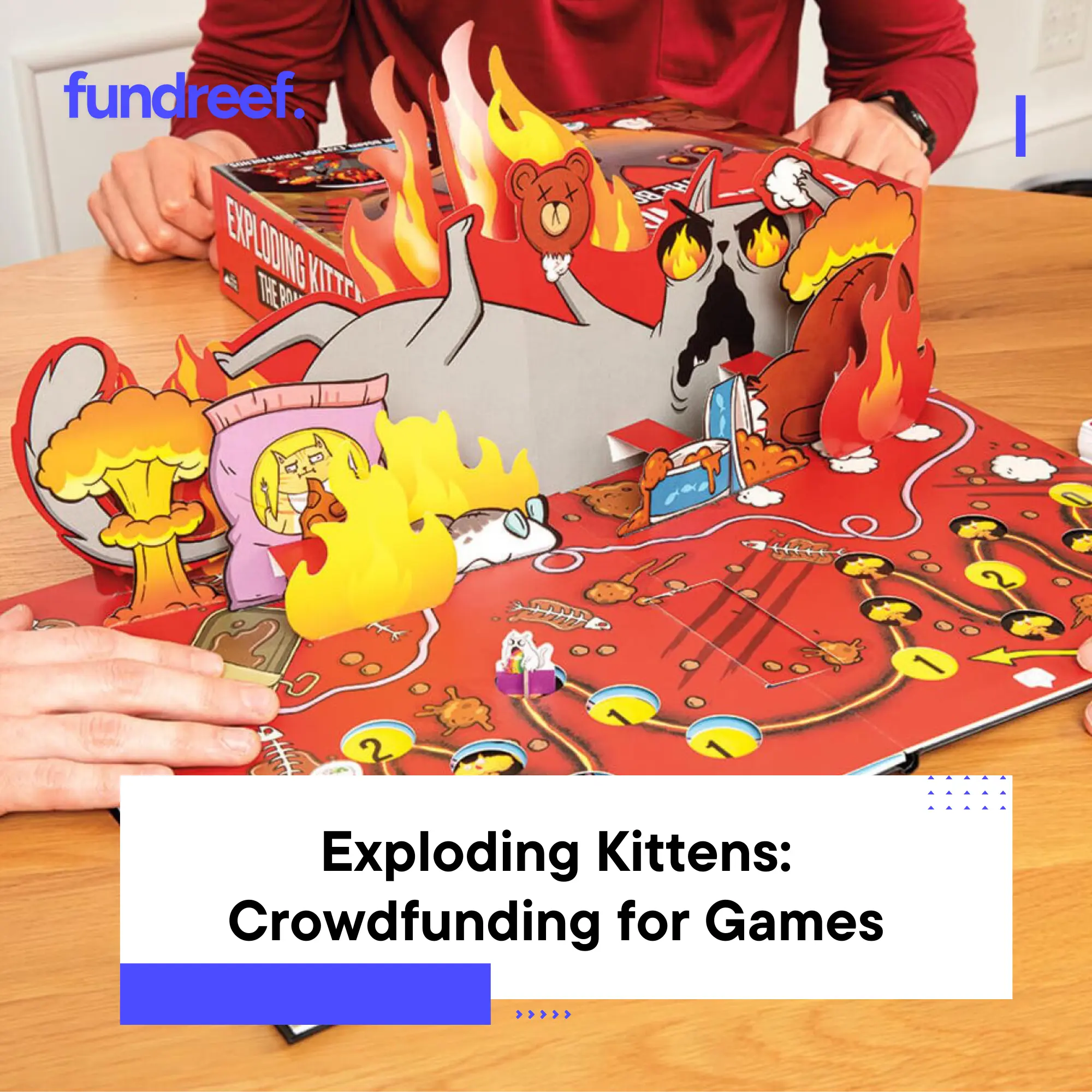
Exploding Kittens asked for $10,000 on Kickstarter in January 2015. Twenty minutes later, they had it. Seven hours in, they hit $1 million. The campaign closed at $8.8 million from 219,832 backers—breaking every crowdfunding record for games and becoming the most-backed project in Kickstarter history at the time. The secret wasn’t just a fun card game; it was Matthew Inman’s 5 million followers from The Oatmeal, daily community engagement that turned backers into evangelists, and stretch goals designed to create viral moments instead of just unlocking features.
This deep dive shows exactly what Exploding Kittens did right, how they turned a simple Russian roulette card game into a cultural phenomenon, the tactics game creators can steal, and where crowdfunding worked (and where it caused problems). You’ll also see lessons for tabletop game campaigns, digital games, and any creator trying to build community before launch.
Table of Contents
- The origin story: how Exploding Kittens came together
- The $8.8M campaign: what they did differently
- Community engagement and daily updates as growth levers
- Stretch goals that created viral moments
- Post-campaign execution and lessons learned
- Key takeaways for game creators on crowdfunding
- Frequently asked questions about Exploding Kittens
1. The origin story: how Exploding Kittens came together
1.1 The team behind the game
Exploding Kittens was created by three people with very different skills:
Elan Lee: Xbox game designer who worked on alternate reality games like The Beast and I Love Bees. He understood how to build online communities and create engagement loops.
Shane Small: Game designer and illustrator who helped refine the game mechanics and production.
Matthew Inman (The Oatmeal): Webcomic creator with 5 million followers across social media. Inman’s audience was massive, engaged, and loved his quirky, absurdist humor.
The game itself started as a casual card game among friends—essentially Russian roulette mixed with strategy cards. Draw from a deck until someone pulls an Exploding Kitten and loses (unless they have a Defuse card). Simple, fast, and funny.
1.2 Why Kickstarter instead of traditional publishing
The team could have pitched the game to traditional board game publishers like Hasbro or Mattel. But that path meant:
- Giving up creative control.
- Waiting 12–18 months for production.
- Lower margins and no direct customer relationships.
Kickstarter offered:
- Full creative control.
- Pre-orders that funded manufacturing with zero inventory risk.
- Direct feedback from the community during development.
- Ownership of customer data for future products.
Elan Lee later said crowdfunding wasn’t just about money—it was about building a community that would co-create the game with them.
2. The $8.8M campaign: what they did differently
2.1 Launch day explosion
The campaign launched on January 20, 2015, with a $10,000 goal. Within 20 minutes, it was fully funded. Seven hours later, it hit $1 million. After 24 hours, $2 million.
What drove the surge:
The Oatmeal effect: Inman announced the campaign to his 5 million followers across Facebook, Twitter, and email. That instant audience created the Day 1 momentum Kickstarter’s algorithm loves—trending projects get featured on the homepage, which drives even more traffic.
A killer campaign video: The 3-minute video was funny, showed actual gameplay, explained the mechanics clearly, and featured Inman’s signature humor. It wasn’t a corporate pitch—it felt like friends inviting you to play.
Simple, fun concept: “A card game for people who are into kittens and explosions and laser beams and sometimes goats.” The pitch was instantly understandable and shareable.
2.2 Pricing and reward tiers
Exploding Kittens kept pricing dead simple:
- $20: One standard deck (supports 2–5 players)
- $35: One deck plus NSFW expansion
- $50: Two decks (for larger groups)
- Higher tiers: Bulk orders for retailers or gifts
No confusing add-ons, no complex bundles. The average pledge was around $40, and 95%+ of backers chose the basic $20 or $35 tiers.
This simplicity meant:
- Easy manufacturing (one SKU with minor variants).
- Clear messaging (no decision paralysis).
- Fast fulfillment post-campaign.
2.3 The power of existing audience
Most crowdfunding campaigns fail because creators have no audience. They launch on Day 1 with zero followers and hope Kickstarter traffic will discover them organically. It rarely works.
Exploding Kittens launched with 5 million potential Day 1 backers from The Oatmeal. That created the initial surge that triggered Kickstarter’s algorithm, which drove millions of additional impressions from non-followers.
Lesson: Build your audience before you launch. If you have 500 email subscribers and 1,000 social followers, don’t expect $8 million.
3. Community engagement and daily updates as growth levers
3.1 Daily updates as content marketing
Most Kickstarter campaigns post 3–5 updates total. Exploding Kittens posted updates daily, often multiple times per day during the campaign’s 30 days.
Each update was:
- Funny (matching The Oatmeal’s brand).
- Progress-focused (new milestones hit, backers reached).
- Community-driven (“You asked for X, we’re adding it”).
Updates included:
- Photos of the team celebrating milestones (often absurd, like hosting pizza parties at animal shelters to celebrate backer counts).
- Sneak peeks at new cards being added.
- Behind-the-scenes stories about game design decisions.
This turned passive backers into active participants. They refreshed the page daily to see what happened next, shared updates with friends, and felt invested in the campaign’s success.
3.2 Backers as evangelists
Elan Lee later said: “Engagement, not money, is what makes crowdfunding work. We treated backers like co-creators, not customers.”
The team:
- Responded to backer comments directly in the campaign.
- Ran polls letting backers vote on card designs.
- Invited backers to suggest mechanics or joke ideas (some made it into the final game).
This created a feedback loop: backers felt heard → they told friends → friends backed → campaign trended higher → more organic traffic → more backers.
3.3 The viral amplification effect
Each update triggered Kickstarter emails to all backers. Backers shared updates on social media. The Oatmeal’s followers shared with their networks. Gaming blogs picked up the story. By Week 2, Exploding Kittens was trending on Reddit, Twitter, and Facebook without paid ads.
This organic virality only works when you have content worth sharing. Boring updates (“We’re 50% funded, thanks!”) don’t spread. Absurd updates (“We rented a giant fuzzy vending machine shaped like a kitten to dispense games at conventions”) do.
4. Stretch goals that created viral moments
4.1 Traditional stretch goals (features and rewards)
Early stretch goals unlocked standard improvements:
- $500k: Add 5th player support (standard deck now supports 5 instead of 4).
- $1M: New card types and mechanics.
- $2M: NSFW expansion upgraded.
These goals kept momentum going, but they weren’t what made the campaign legendary.
4.2 Absurd stretch goals that created press
As the campaign blew past expectations, the team added ridiculous stretch goals designed purely for entertainment:
- $3M: We’ll remove the English instructions and replace them with hieroglyphics (backers voted no, thankfully).
- $4M: We’ll bury a treasure chest full of cards in a secret location (they did this and posted clues).
- $7.5M: We’ll throw pizza parties at animal shelters nationwide (they actually organized this).
These goals weren’t about product features—they were about creating shareable, press-worthy moments. Gaming sites, tech blogs, and even mainstream media covered the campaign because of the weirdness, not the gameplay.
4.3 Stretch goals as narrative tension
Stretch goals aren’t just about unlocking stuff—they create narrative tension. “Will we hit the next goal?” becomes a cliffhanger that brings backers back daily.
Exploding Kittens used this brilliantly: they paced goals to create new milestones every 2–3 days, ensuring constant momentum and media hooks throughout the 30-day campaign.
5. Post-campaign execution and lessons learned
5.1 Manufacturing and fulfillment
After closing at $8.8 million and 219,832 backers, the team faced a massive challenge: manufacturing and shipping nearly 220,000 decks to backers worldwide.
They shipped on time (rare for crowdfunding) by:
- Partnering with established game manufacturers who’d scaled production before.
- Keeping the product simple (one deck, minimal variants).
- Overestimating timelines and communicating delays proactively.
5.2 Retail expansion and long-term business
After fulfilling Kickstarter orders, Exploding Kittens expanded to retail. The game is now sold in Target, Walmart, Barnes & Noble, and thousands of game stores globally. Total sales exceeded 10 million copies by 2020.
The Kickstarter campaign gave them:
- Proof of demand (VCs and retailers love “we raised $9M and sold 220k units in 30 days”).
- A customer list (200k+ emails for future product launches).
- Cash to self-fund manufacturing without VC dilution.
5.3 Risks and challenges they faced
Exploding Kittens hit unexpected problems:
Trademark issues: They didn’t trademark “Exploding Kittens” before launch. By Day 7, they realized competitors could copy the name. They filed emergency trademarks mid-campaign.
Overwhelming scale: Going from “let’s print 1,000 decks” to “we need 220,000 units” in 30 days was terrifying. They had to redo manufacturing contracts and logistics on the fly.
Copycats: Within weeks, knockoff games appeared on Amazon and Alibaba. Protecting IP in games is hard—mechanics can’t be copyrighted, only art and branding.
6. Key takeaways for game creators on crowdfunding
6.1 Build your audience first
Exploding Kittens worked because The Oatmeal had 5 million followers. You don’t need millions, but you do need some audience before launch.
Minimum viable audience for a successful game campaign:
- 5,000–10,000 email subscribers
- 10,000+ social media followers (combined)
- Active engagement (comments, shares, not just vanity metrics)
Spend 6–12 months building this before you launch. Blog about game design, post playtest videos, run contests, engage in board game communities on Reddit and BoardGameGeek.
6.2 Daily engagement beats one-time marketing
Most campaigns front-load marketing (big Day 1 push, then silence). Exploding Kittens posted updates daily, keeping backers engaged and giving them reasons to share repeatedly.
Your update strategy:
- Pre-launch: Weekly dev blogs, playtest videos, teaser content.
- Campaign: Daily updates (progress, new stretch goals, behind-the-scenes, polls).
- Post-campaign: Monthly manufacturing updates until fulfillment.
6.3 Simplicity wins (pricing, rewards, mechanics)
Exploding Kittens had 3 main reward tiers and a concept you could explain in 10 seconds. Complex campaigns with 20 SKUs, confusing add-ons, and convoluted rules confuse backers and slow conversions.
Keep it simple:
- 1–3 core reward tiers.
- Clear, jargon-free pitch.
- Easy-to-manufacture product (fewer SKUs = faster fulfillment).
6.4 Stretch goals as storytelling, not just features
Use stretch goals to create narrative momentum and viral moments, not just unlock features. Exploding Kittens’ pizza party at animal shelters had nothing to do with gameplay but generated press and social shares worth millions in earned media.
6.5 Crowdfunding isn’t a store—it’s community building
Elan Lee said it best: “Kickstarter is not a store. It’s where you enlist a community.”
Treat backers as co-creators. Ask for feedback. Run polls. Share behind-the-scenes struggles. The more invested they feel, the more they’ll evangelize your project.
6.6 Build your next campaign list now
When preparing your crowdfunding campaign, identify the exact backers and influencers who’ve supported similar projects. Platforms like Fundreef can help game creators filter by category (tabletop, digital games), funding history, and backer profiles—so you can reach people who’ve already backed 5–10 game campaigns and are likely to back yours, instead of spamming generic game forums hoping for traction.
Frequently asked questions about Exploding Kittens
How much did Exploding Kittens raise on Kickstarter?
Exploding Kittens raised $8.78 million from 219,832 backers in 30 days (January–February 2015). The campaign asked for $10,000 and hit that goal in 20 minutes. It became the most-backed Kickstarter project in history at the time and set the record for most-funded game project.
Why was Exploding Kittens so successful on Kickstarter?
Success came from Matthew Inman’s 5 million followers (The Oatmeal), daily community engagement through updates, simple pricing and gameplay, viral stretch goals (pizza parties, treasure hunts), and a campaign video that was funny and shareable. The existing audience created Day 1 momentum that triggered Kickstarter’s algorithm and organic virality.
What is Exploding Kittens the game?
Exploding Kittens is a card game combining Russian roulette and strategy. Players draw cards until someone draws an Exploding Kitten and loses—unless they have a Defuse card. Other cards let you skip turns, peek at the deck, force opponents to draw, or shuffle. Games last 5–15 minutes for 2–5 players.
How did Exploding Kittens handle manufacturing 220,000 decks?
They partnered with established game manufacturers, kept the product simple (one deck with minimal variants), and overes timated timelines. They shipped on time by communicating proactively and avoiding scope creep during production. The $8.8M raised funded manufacturing without needing outside investors.
Did Exploding Kittens face any problems during the campaign?
Yes. They forgot to trademark “Exploding Kittens” before launch and had to file emergency trademarks mid-campaign. Scaling from 1,000 units to 220,000 forced them to redo manufacturing contracts. Copycat games appeared on Amazon and Alibaba within weeks, though IP protection for game mechanics is limited.
What lessons can game creators learn from Exploding Kittens?
Build your audience before launch (email list, social followers). Engage daily with backers through updates. Keep pricing and rewards simple. Use stretch goals to create viral moments, not just unlock features. Treat crowdfunding as community building, not a store. Ship on time by overpromising timelines and partnering with experienced manufacturers.
Suggested visuals to create
- Exploding Kittens funding timeline
Horizontal timeline showing funding milestones: $10k goal (20 min) → $1M (7 hours) → $2M (24 hours) → $8.78M (30 days), with backer count annotations. - Stretch goal progression chart
Visual showing stretch goals unlocked at $500k, $1M, $2M, $3M, $4M, $7.5M with descriptions (new cards, absurd goals like pizza parties and treasure hunts). - Crowdfunding success formula diagram
Circular flywheel showing: Existing audience → Day 1 surge → Kickstarter trending → Press coverage → Daily updates → Backer engagement → Viral sharing → More backers → Repeat.
