

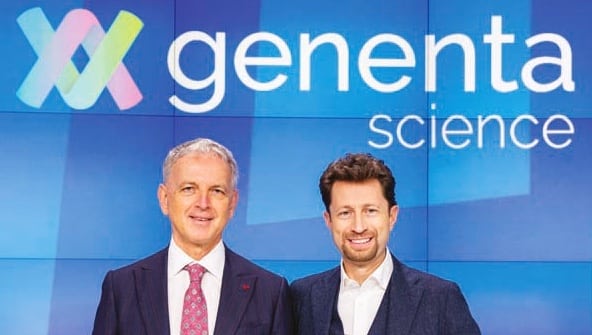
In a significant stride for European biotech innovation, Genenta Science (Nasdaq: GNTA), the Italian-American clinical-stage immuno-oncology company, announced this week a €20 million ($21.9 million) investment from ENEA Tech and Biomedical (ETB), delivered via a Mandatory Convertible Bond. This deal not only signals growing investor confidence in Genenta’s pioneering Temferon™ platform but also arrives as early survival data from its glioblastoma trial paints a promising picture for one of the world’s deadliest brain tumors.
Backed by the Italian Ministry of Enterprises and Made in Italy, ETB’s strategic commitment brings robust validation for Genenta’s approach—reprogramming the tumor microenvironment using gene-modified hematopoietic stem cells to enable long-lasting anti-cancer immune responses.
And the timing couldn’t be better.
Immunotherapy Meets Engineering: Genenta’s Edge
Genenta’s core innovation—Temferon™—targets a critical pain point in oncology: the immune system’s failure to recognize and attack tumors. By engineering hematopoietic stem cells (HSCs) to express immune-activating payloads directly within tumors, Genenta’s strategy is to bypass systemic toxicity and overcome immune evasion mechanisms.
The biotech’s most advanced program is in Glioblastoma Multiforme (GBM), a notoriously aggressive brain cancer with limited treatment options. Using Temferon, Genenta aims to repolarize tumor-associated myeloid cells (TAMs), historically considered “silent accomplices” of tumor progression, into pro-inflammatory agents that support T cell-mediated tumor clearance.
In short: they’re hacking the body’s own biology to rewire cancer’s neighborhood.
€20M in Convertible Bond Financing: A Win-Win Mechanism
Let’s unpack the financing.
The €20M convertible bond was structured to minimize shareholder dilution while providing meaningful runway for Genenta’s next clinical milestones—particularly the expansion into metastatic Renal Cell Carcinoma (mRCC), a form of kidney cancer with growing global incidence.
The bond matures in March 2028, after which it will convert into equity. A two-year lock-up period follows, extending ETB’s commitment until 2030—a rare display of long-term faith in a biotech stock. Most notably, conversion is non-dilutive in the short term, offering Genenta critical financial flexibility without disrupting its cap table.
“ETB conducted deep scientific and legal due diligence before committing,” said Pierluigi Paracchi, CEO and co-founder of Genenta. “We believe this structure supports both our financial goals and our commitment to existing shareholders. The capital will allow us to validate Temferon’s mechanism of action beyond glioblastoma and into other solid tumors.”
The structure includes two tranches:
• First Tranche: €7.5 million ($8.2M), to assess safety in the ongoing Phase 1/2a trial in mRCC.
• Second Tranche: €12.5 million ($13.7M), contingent on positive safety and tolerability data from the first cohort.
Importantly, ETB’s equity in Genenta will be capped at 29%, with a maximum conversion price set at $17.64 per share, as evaluated independently.
For a biotech that IPO’d in December 2021 and now trades with a modest market cap, the endorsement from ETB represents a huge vote of confidence in its future growth trajectory.
Glioblastoma Data: Quiet Progress, Loud Implications
The latest interim data from Genenta’s Phase 1/2a trial in patients with unmethylated MGMT GBM (uMGMT-GBM)—a particularly hard-to-treat subtype—suggest Temferon may be rewriting the rules for survival.
As of the February 2025 data cutoff, the two-year survival rate has increased to 29%, up from 25% in October 2024. That may seem incremental at first glance—but context matters. Historically, standard-of-care treatments like radiotherapy and temozolomide yield just 14% survival at two years, with a median overall survival of 13–15 months.
Temferon patients are now living a median of 17 months—and this is still early data. If the trend holds, it could put Genenta on a collision course with major pharma players in the brain cancer and solid tumor space.
Prof. Luigi Naldini, Genenta’s co-founder and a globally respected authority in gene therapy, emphasized the importance of this trajectory.
“We’re seeing Temferon not just surviving the translational valley of death, but starting to shape new immune landscapes in tumors,” Naldini noted. “The data supports the idea that reprogramming the tumor microenvironment is a viable therapeutic avenue—not just in GBM, but potentially across many solid tumor types.”
RCC: A New Frontier, A New Combination
Genenta isn’t stopping at GBM. The company has begun patient enrollment in a Phase 1/2a clinical trial for metastatic Renal Cell Carcinoma, a notoriously immunosuppressive cancer.
This study will also explore Temferon in combination with immune checkpoint inhibitors, tapping into the lucrative checkpoint inhibitor market led by drugs like Opdivo (Bristol Myers Squibb) and Keytruda (Merck). Genenta’s goal is clear: to demonstrate that Temferon can enhance response rates in patients who would otherwise be non-responders to checkpoint therapy alone.
It’s a smart move. RCC is already recognized as one of the more immunogenic solid tumors, but resistance to immunotherapy remains a problem. Genenta is aiming to solve that resistance from the inside out—literally—by changing the immune contexture at the tumor site.
Why This Deal Matters: A TechCrunch-Style Breakdown
If you’re wondering what makes this deal TechCrunch-worthy, let’s break it down:
1. Smart Capital Structure
By leveraging a mandatory convertible bond, Genenta avoids immediate dilution, aligns with a long-term investor, and sets up future equity at a price reflecting potential—not present uncertainty.
2. Validation from a Strategic Investor
ETB isn’t just a fund—it’s a public-private powerhouse managing over €1.7 billion with a sharp eye for biomedical breakthroughs. Their involvement adds layers of scientific, legal, and strategic validation.
3. Platform Expansion Potential
While the industry is shifting toward tumor-agnostic therapies, Genenta is already positioning Temferon as a modular solution. A success in RCC could open the door to additional indications—think pancreatic cancer, melanoma, even triple-negative breast cancer.
4. Cross-Atlantic Footprint
With HQs in both Milan and New York, Genenta offers a rare blend of European research depth and U.S. market access, giving it flexibility on both regulatory and commercial fronts.
5. Public Market Readiness
Genenta remains one of the few European biotech startups that have made the leap to Nasdaq and stayed the course. The new capital means it’s not just surviving the biotech winter—it’s actively investing in growth.
A Glimpse at the Broader Market
While U.S. biotech IPOs slowed dramatically in 2023 and 2024, the private capital markets in Europe are quietly warming up, particularly for companies focused on cell and gene therapy. According to Evaluate Vantage, nearly 40% of all biotech capital raised in Europe in 2024 went into oncology platforms with novel delivery mechanisms.
Genenta’s platform—sitting at the intersection of cell therapy, gene therapy, and immuno-oncology—ticks all the boxes for next-gen investment themes.
Moreover, Temferon’s one-time therapy approach could radically improve healthcare economics compared to chronic dosing regimens—something both payers and regulators are increasingly watching.
What’s Next for Genenta?
In the coming 12–24 months, Genenta plans to:
• Complete enrollment in its Phase 1/2a mRCC trial.
• Release updated survival and immunological biomarker data for GBM.
• Initiate combination therapy studies with checkpoint inhibitors.
• Explore strategic partnerships for global expansion.
• Advance Temferon into additional solid tumor indications.
If data continues trending positively, Genenta could emerge as a prime acquisition target—especially for Big Pharma players with immuno-oncology pipelines in need of differentiation.
Final Thoughts: Betting on the Microenvironment
In an era where cancer treatment is being reimagined not just around the tumor itself but the ecosystem it thrives in, Genenta is making a bold bet on the microenvironment.
Their hypothesis is elegantly simple: change the tumor’s neighborhood, and you change its destiny.
Armed with €20M in strategic capital, growing clinical evidence, and a long-term partner in ETB, Genenta is well-positioned to become a dark horse in the immuno-oncology space—especially as the world looks beyond traditional antibody and small molecule approaches.
If you’re watching the next wave of biotech disruptors in 2025, this Milan-New York biotech hybrid is one to keep an eye on.
Genenta financing 2025, Genenta €20M investment, Temferon trial results, Genenta RCC trial, glioblastoma gene therapy, Genenta Science Nasdaq GNTA, ENEA Tech and Biomedical, mandatory convertible bond biotech, immuno-oncology funding, biotech startup Milan, ETB biotech investment, tumor microenvironment therapy, Genenta Temferon combination therapy, cell-based immuno-oncology therapy, gene-modified HSC therapy, metastatic renal cell cancer, glioblastoma survival rates, biotech company funding 2025, cancer gene therapy startup, Genenta pipeline expansion
