

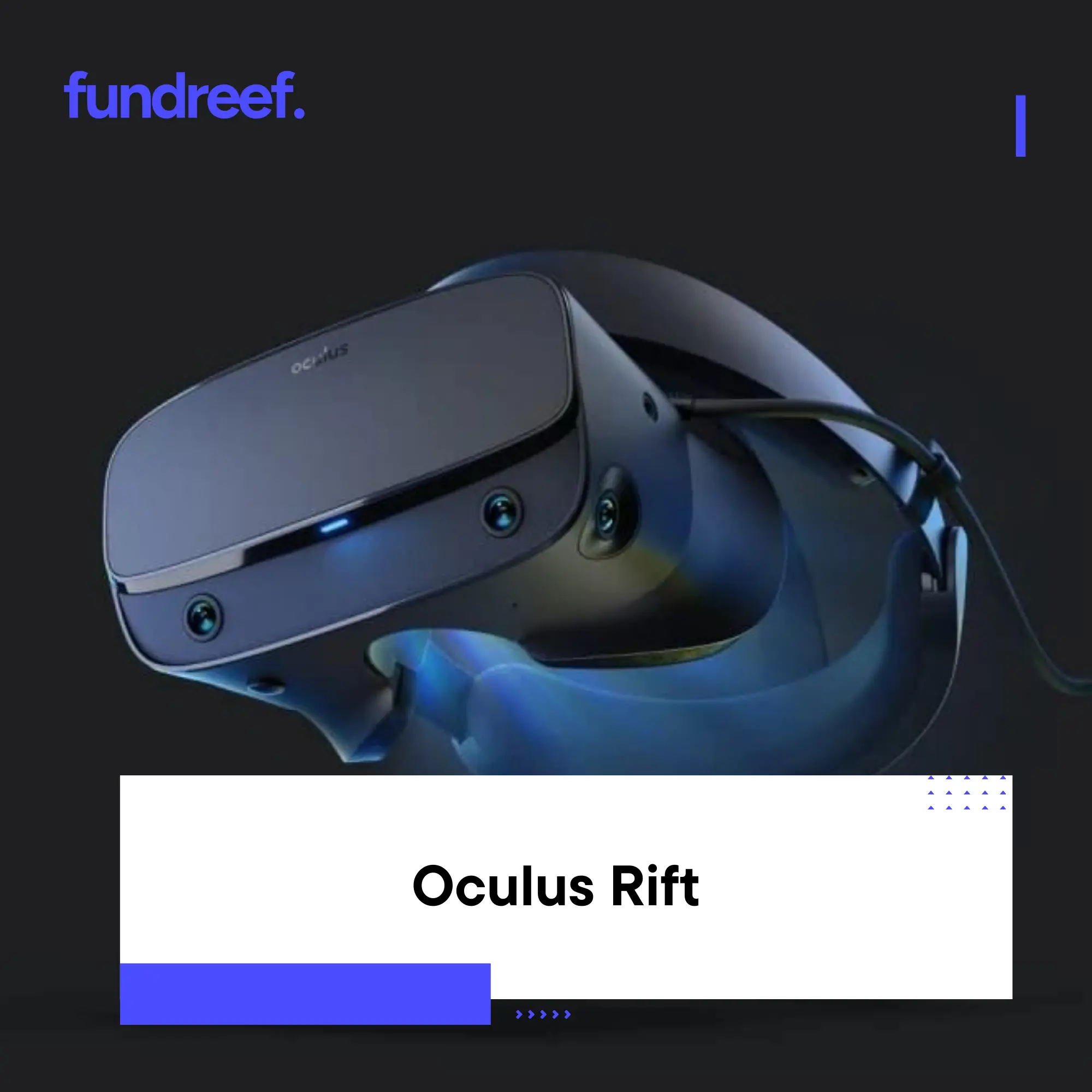
Palmer Luckey launched the Oculus Rift Kickstarter campaign in August 2012 asking for $250,000 to build developer kits for a virtual reality headset he’d prototyped in his parents’ garage. Within 24 hours, the campaign hit its goal. By the end, 9,522 backers pledged $2.4 million—nearly 10x the target. Less than two years later, Facebook acquired Oculus VR for $2 billion, making it one of the fastest Kickstarter-to-acquisition stories in tech history and validating crowdfunding as a legitimate path to building billion-dollar companies. But the journey wasn’t just about raising money—it was about galvanizing a community, attracting legendary game developers like John Carmack and Gabe Newell, and proving that consumer VR was finally viable after decades of failed attempts.
This guide shows exactly how Oculus went from crowdfunding campaign to $2B exit, the strategic decisions that turned Kickstarter backers into evangelists, how Palmer Luckey leveraged early demo buzz to raise $91M in VC funding, the backlash and lessons from the Facebook acquisition, and tactical takeaways for hardware founders using crowdfunding to launch companies.
Table of Contents
- Pre-Kickstarter: Palmer Luckey’s garage prototype
- The Kickstarter campaign: how Oculus raised $2.4M
- From developer kits to VC funding: $91M raised
- The Facebook acquisition: $2 billion in 601 days
- Backer backlash and crowdfunding ethics debate
- Key lessons for hardware crowdfunding campaigns
- Frequently asked questions about Oculus and Kickstarter
1. Pre-Kickstarter: Palmer Luckey’s garage prototype
1.1 The VR graveyard (1990s-2010s)
Virtual reality had been “the future” for decades—and failed every time. In the 1990s, companies like Virtuality Group and Nintendo (Virtual Boy) launched clunky, nausea-inducing headsets that flopped commercially. Problems were consistent:
Low field of view: Most headsets offered 40–60 degree FOV, breaking immersion (human vision is ~180 degrees).
High latency: Head tracking lagged 50–100ms behind movement, causing motion sickness.
Prohibitive cost: Professional VR systems cost $20,000–$50,000, accessible only to research labs and military.
Heavy, uncomfortable hardware: Headsets weighed 2–5 pounds, causing neck strain after minutes.
By 2010, VR was considered a dead-end technology. Experts dismissed it as perpetually “5–10 years away.”
1.2 Palmer Luckey’s teenage obsession
Palmer Luckey grew up in Long Beach, California, homeschooled and obsessed with electronics. As a teenager, he collected vintage VR headsets on eBay—devices from failed 1990s companies, military surplus, research prototypes. He reverse-engineered them, studying why they failed.
Key insight: The technology existed to build better VR, but no one had optimized for the right variables:
- Wide field of view (90+ degrees)
- Low latency head tracking (<20ms)
- Lightweight design
- Affordable price point (<$300)
At 17, Luckey started building prototypes in his parents’ garage, experimenting with smartphone screens, motion sensors, and custom optics.
1.3 The breakthrough: Rift Prototype 1
By 2011, Luckey had built “Rift Prototype 1″—a duct-taped headset using a 5.6-inch LCD panel, custom lenses, and an off-the-shelf motion sensor. Specifications:
- 90-degree field of view (vs 40 degrees in most headsets)
- Low-latency head tracking (sub-20ms)
- Lightweight (~500 grams vs 2+ pounds)
- Estimated cost to manufacture: $200–$300 (vs $20k+ for professional systems)
Luckey posted about his prototypes on MTBS3D (Meant to Be Seen 3D), a forum for VR enthusiasts and developers.
1.4 John Carmack’s endorsement
In early 2012, legendary game developer John Carmack (co-creator of Doom and Quake) saw Luckey’s forum posts and requested a prototype. Carmack was exploring VR for id Software and had tested every headset available—none impressed him.
When Carmack tried Luckey’s prototype, he was stunned. The wide FOV and low latency created immersion far beyond anything he’d experienced. Carmack duct-taped Luckey’s prototype to his own head-tracking rig and brought it to E3 2012, demoing Doom 3 in VR.
The E3 demo went viral. Press and developers lined up to try it. Carmack publicly endorsed Luckey’s work, calling it “the best VR headset I’ve ever used.” This third-party validation from one of gaming’s most respected figures gave Luckey instant credibility.
2. The Kickstarter campaign: how Oculus raised $2.4M
2.1 Campaign strategy: developer kits, not consumer product
Luckey didn’t promise a polished consumer headset. Instead, he framed the Kickstarter as funding developer kits (DK1) for game creators to experiment with VR.
Why this worked:
Lower expectations: Developer kits could be rough around the edges—cables, exposed circuits, basic design. No one expected perfection.
Target audience: Developers were the ideal early adopters—they understood bleeding-edge tech, tolerated bugs, and would create content that proved VR’s value.
Ecosystem play: By getting headsets into developers’ hands, Oculus created a pipeline of VR games and experiences, solving the “chicken-and-egg” problem (no content without headsets, no headsets without content).
2.2 The campaign video: credibility through endorsements
The Kickstarter video featured:
Palmer Luckey explaining the vision: Enthusiastic, authentic, technical but accessible. Luckey’s passion was infectious.
John Carmack endorsement: Carmack appeared on camera praising the Rift, lending instant credibility.
Gabe Newell (Valve) endorsement: The founder of Steam and Half-Life called it “the best VR demo I’ve ever seen.”
Cliff Bleszinski (Epic Games) endorsement: Creator of Gears of War expressed excitement about developing for Rift.
These weren’t paid endorsements—they were genuine support from industry legends. This social proof made the campaign feel like a movement, not just a product launch.
2.3 Funding tiers and rewards
Oculus offered tiered rewards:
| Pledge | Reward | Backers |
|---|---|---|
| $25 | T-shirt + Oculus stickers | ~1,200 |
| $75 | Exclusive SDK access + T-shirt | ~1,000 |
| $300 | Developer Kit 1 (DK1) headset | ~7,500 |
| $5,000 | 5× DK1 kits for schools/labs | ~30 |
| $10,000 | Lunch with Palmer Luckey + visit to Oculus HQ | ~5 |
Key insight: The $300 DK1 tier captured 75%+ of pledges. Backers weren’t buying a T-shirt—they were investing in the future of VR and getting early access to build for the platform.
2.4 The 24-hour milestone
The campaign launched August 1, 2012, with a $250,000 goal. It hit the goal in under 24 hours.
By Day 2, pledges exceeded $1 million. Press coverage exploded: TechCrunch, Wired, Engadget, Ars Technica all covered the campaign. The narrative was irresistible: “19-year-old garage inventor backed by John Carmack is bringing VR to the masses.”
2.5 Final results: $2.4M from 9,522 backers
When the campaign closed September 1, 2012:
- Total raised: $2,437,429
- Backers: 9,522
- Funded: 974% of goal
- Average pledge: $256
Top 10 most-funded Kickstarter tech campaigns at the time. The campaign proved demand existed for consumer VR and gave Oculus resources to move from prototype to production.
3. From developer kits to VC funding: $91M raised
3.1 Shipping DK1 (April 2013)
Oculus shipped ~7,500 DK1 units to Kickstarter backers and additional pre-orders in April 2013. Reviews were positive but noted rough edges:
Pros: Immersive, wide FOV (90 degrees), low latency, huge leap over existing VR.
Cons: Low resolution (640×800 per eye = visible pixels), motion sickness for some users, limited content, requires powerful PC.
Despite limitations, developers rallied. Within months, hundreds of indie games added Rift support. Projects like The Gallery: Six Elements launched on Kickstarter as “Rift exclusives,” betting on VR’s future.
3.2 Series A: $16M led by Spark Capital (June 2013)
Four months after shipping DK1, Oculus raised $16 million Series A led by Spark Capital, with Matrix Partners and Founders Fund participating.
Why investors paid $16M for a developer kit with no consumer product:
Proof of concept: DK1 validated that consumer VR was technically feasible.
Developer momentum: Hundreds of indie games and experiences in development.
Legendary advisors: John Carmack joined Oculus as Chief Technology Officer (August 2013), legitimizing the company’s technical vision.
Market timing: Smartphone components (high-res OLED screens, motion sensors) finally made cheap, high-quality VR possible.
3.3 Series B: $75M led by Andreessen Horowitz (December 2013)
Six months later, Oculus raised $75 million Series B led by Andreessen Horowitz, with participation from Spark, Matrix, and Founders Fund.
What changed in 6 months:
DK2 announced: Improved resolution (960×1080 per eye), better head tracking, reduced motion sickness.
Valve partnership: Valve officially integrated Rift support into Team Fortress 2 and Steam, bringing AAA content.
Publishing arm: Oculus hired former EA exec David DeMartini to fund VR game development, solving the content problem.
Chris Dixon (a16z) conviction: After initially passing (the headset required duct tape), Dixon tried an updated demo and described it as “being teleported.” He convinced a16z to lead the round.
Cumulative VC raised: $91 million (Series A + Series B).
3.4 The Marc Andreessen-Mark Zuckerberg connection
Marc Andreessen (a16z founder and Facebook board member) connected Oculus CEO Brendan Iribe with Mark Zuckerberg. Zuck tried the Rift demo at a16z’s office and was blown away. He immediately flew to Oculus HQ in Irvine, California, to see the latest build.
Zuckerberg’s reaction: “This is the future of communication. Facebook needs to be part of this.”
4. The Facebook acquisition: $2 billion in 601 days
4.1 The announcement (March 25, 2014)
On March 25, 2014—601 days after the Kickstarter campaign launched—Facebook announced it would acquire Oculus VR for $2 billion ($400M cash + $1.6B in Facebook stock + $300M earn-out for hitting milestones).
Mark Zuckerberg posted:
“Oculus has the chance to create the most social platform ever. Imagine enjoying a courtside seat at a game, studying in a classroom of students and teachers all over the world, or consulting with a doctor face-to-face—just by putting on goggles in your home. This is really a new communication platform.”
4.2 Why Facebook paid $2B
Strategic vision: Zuckerberg saw VR as the next computing platform after mobile. Whoever owned the VR platform would control social interaction for decades.
Developer ecosystem: Oculus had hundreds of developers building content, giving Facebook a head start vs competitors (Sony, HTC, Google).
Talent acquisition: Palmer Luckey, John Carmack, and the Oculus team were the best VR engineers in the world.
Defensive move: If VR became the dominant platform and Facebook didn’t own it, someone else (Google, Apple) would control the next social layer.
Proof of traction: $2.4M Kickstarter + $91M VC funding + 10,000+ DK1 units shipped proved demand existed.
4.3 Deal structure
- $400M cash upfront
- 23.1 million Facebook shares (valued at ~$1.6B at announcement)
- $300M earn-out if Oculus hit performance milestones
- Total: ~$2 billion
Palmer Luckey’s net worth (estimated): $700 million by 2015 (Forbes).
4.4 Timeline: Kickstarter to exit
- August 1, 2012: Kickstarter launches
- September 1, 2012: Campaign closes at $2.4M
- April 2013: DK1 ships
- June 2013: $16M Series A
- December 2013: $75M Series B
- March 25, 2014: Facebook acquisition announced
Time from Kickstarter launch to $2B exit: 601 days (1 year, 7 months).
5. Backer backlash and crowdfunding ethics debate
5.1 The Kickstarter community explosion
When the Facebook acquisition was announced, many Kickstarter backers felt betrayed. Common complaints:
“I funded a garage startup, not a Facebook product.” Backers wanted to support an independent hardware company, not enrich a social media giant.
“Where’s my equity?” Backers received T-shirts and developer kits as rewards, not shares. Early VCs and Palmer Luckey made hundreds of millions; backers got nothing.
“This defeats the purpose of crowdfunding.” Kickstarter was supposed to democratize access to capital and products, not create windfall exits for founders while backers get forgotten.
Minecraft creator Notch (Markus Persson) publicly canceled Oculus support: “Facebook creeps me out.” Other developers echoed concerns about Facebook’s data practices and closed ecosystem.
5.2 The equity vs rewards debate
Kickstarter backers received rewards (developer kits, T-shirts), not equity. This is fundamental to Kickstarter’s model:
- Rewards-based crowdfunding = pre-order products
- Equity crowdfunding = buy shares in company
If Oculus had used equity crowdfunding (like AngelList, Republic, or Seedrs), backers would have owned shares and participated in the $2B exit. A $300 investment at Kickstarter valuation (~$2M) could have been worth $300k+ post-exit.
But equity crowdfunding was barely legal in the US in 2012 (JOBS Act passed but not yet implemented). Kickstarter didn’t offer equity, only rewards.
5.3 Oculus and Palmer Luckey’s response
Palmer Luckey addressed backlash on Reddit:
“We partnered with Facebook because they believe in our vision and have the resources to help us deliver VR to everyone, not just gamers. Kickstarter backers made Oculus possible—you took a risk when no one else would. The headsets you received were exactly what we promised. The acquisition doesn’t change that.”
Luckey emphasized:
- Backers received what they paid for (DK1 kits)
- Facebook’s resources would accelerate VR development
- Consumer Rift would be better and cheaper thanks to Facebook funding
5.4 Long-term perspective: Was the acquisition good for VR?
Arguments FOR:
Massive investment: Facebook poured billions into Oculus over the next decade—funding R&D, content, and consumer product launches (Rift, Quest).
Market validation: The $2B acquisition signaled to Sony, HTC, Google, and Apple that VR was viable, spurring competition (HTC Vive, PlayStation VR).
Consumer Rift launched: Oculus Rift CV1 (consumer version) shipped in 2016 at $599, delivering on the original vision.
Quest standalone headset: Oculus Quest (2019) at $399 became the best-selling VR headset, bringing VR to millions.
Arguments AGAINST:
Facebook integration: Oculus became tied to Facebook ecosystem (Facebook account required for Quest until backlash forced reversal in 2022).
Privacy concerns: Facebook’s data practices tainted Oculus’s brand for privacy-conscious users.
Palmer Luckey ousted: Luckey left Facebook/Oculus in 2017 after political controversy, removing the founder’s vision from the company.
VR still niche: Despite billions invested, VR remains a niche market (30M+ Quest units vs billions of smartphones). The “metaverse” vision hasn’t materialized.
6. Key lessons for hardware crowdfunding campaigns
6.1 Leverage third-party credibility early
Oculus’s Kickstarter succeeded because John Carmack, Gabe Newell, and Cliff Bleszinski endorsed it publicly. Their credibility made backers believe.
Lesson: Before launching, secure endorsements from respected figures in your industry. Show prototypes to influencers, journalists, and experts. Record their reactions for your campaign video.
6.2 Target early adopters, not mass market
Oculus framed the Kickstarter as developer kits, not consumer products. This lowered expectations and attracted technically savvy backers who tolerated rough edges.
Lesson: Don’t promise a perfect consumer product if you’re early-stage. Target enthusiasts, developers, or professionals who value innovation over polish.
6.3 Solve the ecosystem problem
Oculus didn’t just build hardware—they invested in content. By funding game developers and partnering with Valve, they ensured DK1 owners had experiences to try.
Lesson: If your hardware requires an ecosystem (apps, content, accessories), invest in seeding that ecosystem during crowdfunding. Announce partnerships, funded projects, or SDK access.
6.4 Use crowdfunding to prove demand, not just raise capital
Oculus raised $2.4M on Kickstarter, but the real value was proof of demand. The campaign validated that 10,000+ people would pay $300 for VR, making VC pitches easier.
Lesson: Treat crowdfunding as market validation first, revenue second. Use backer count and pledge data to prove demand to VCs, retailers, and partners.
6.5 Manage post-exit backlash proactively
Oculus underestimated the emotional connection Kickstarter backers felt. The Facebook acquisition felt like betrayal to some.
Lesson: If you raise via crowdfunding and exit to an acquirer, communicate the rationale transparently and early. Consider offering backers token equity or exclusive benefits in the acquired entity.
6.6 Build your crowdfunding investor pipeline strategically
Crowdfunding success often leads to VC interest (as Oculus proved). When raising post-crowdfunding rounds, target investors who understand hardware, ecosystem plays, and long R&D cycles—not just SaaS-focused VCs expecting fast revenue growth.
Platforms like Fundreef help hardware founders identify VCs with track records in consumer electronics, gaming hardware, and deep tech—filter by “hardware investments,” “crowdfunding-to-VC paths,” and “patient capital” so you’re pitching funds that appreciate the 3–5 year product development timelines hardware requires, not SaaS investors expecting profitability in 18 months.
Frequently asked questions about Oculus and Kickstarter
How much did Oculus raise on Kickstarter?
Oculus raised $2,437,429 from 9,522 backers on Kickstarter in August-September 2012, nearly 10x the $250,000 goal. The campaign funded developer kits (DK1) for early VR enthusiasts and game developers at $300 per kit. This proved demand for consumer VR and attracted $91M in VC funding within 18 months.
How long after Kickstarter did Facebook buy Oculus?
Facebook acquired Oculus VR for $2 billion on March 25, 2014—601 days (1 year, 7 months) after the Kickstarter campaign launched. Between Kickstarter and acquisition, Oculus raised $16M Series A (June 2013) and $75M Series B (December 2013), shipped 7,500+ DK1 units, and hired John Carmack as CTO.
Why did Kickstarter backers get upset about the Facebook acquisition?
Backers felt betrayed because they funded an independent garage startup, not a Facebook product. They received rewards (developer kits, T-shirts) but no equity, while Palmer Luckey and VCs made hundreds of millions. Minecraft creator Notch and other developers canceled Oculus support over Facebook privacy concerns and closed ecosystem fears.
What did Kickstarter backers receive vs what VCs received?
Kickstarter backers received rewards: $25 tier got T-shirts, $300 tier got DK1 developer kits. VCs who invested in Series A/B ($91M total) received equity and participated in the $2B Facebook exit. A $300 Kickstarter pledge yielded a headset; a $300k VC investment could have returned $6M+ at exit.
What were the key factors in Oculus’s Kickstarter success?
Third-party credibility from John Carmack, Gabe Newell, and Cliff Bleszinski; targeting developers (not consumers) with realistic developer kit expectations; solving the ecosystem problem by funding VR content development; viral E3 demo buzz before launch; timing (smartphone components made cheap VR feasible); authentic founder story (19-year-old garage inventor).
Did the Facebook acquisition help or hurt VR as an industry?
Arguments for: Facebook invested billions in R&D, launched consumer Rift (2016) and Quest (2019), validated VR market (spurring competition from Sony, HTC, Valve), and brought VR to 30M+ users. Arguments against: Facebook integration and privacy concerns tainted brand, Palmer Luckey ousted (2017), VR remains niche despite billions invested, “metaverse” vision hasn’t materialized.
Suggested visuals to create
- Oculus timeline infographic
Horizontal timeline from August 2012 (Kickstarter launch) → September 2012 ($2.4M raised) → April 2013 (DK1 ships) → June 2013 ($16M Series A) → December 2013 ($75M Series B) → March 2014 ($2B Facebook acquisition), with 601-day annotation. - Kickstarter funding tier breakdown
Pie chart or bar graph showing backers by tier: $25 T-shirt (1,200), $75 SDK (1,000), $300 DK1 (7,500), $5k+ (30), with annotation that $300 tier captured 75%+ of total pledges. - Rewards vs Equity comparison table
Side-by-side showing: Kickstarter backer ($300 → DK1 headset, $0 exit value) vs VC investor ($300k → equity stake, ~$6M+ at $2B exit), highlighting the equity crowdfunding gap.
