

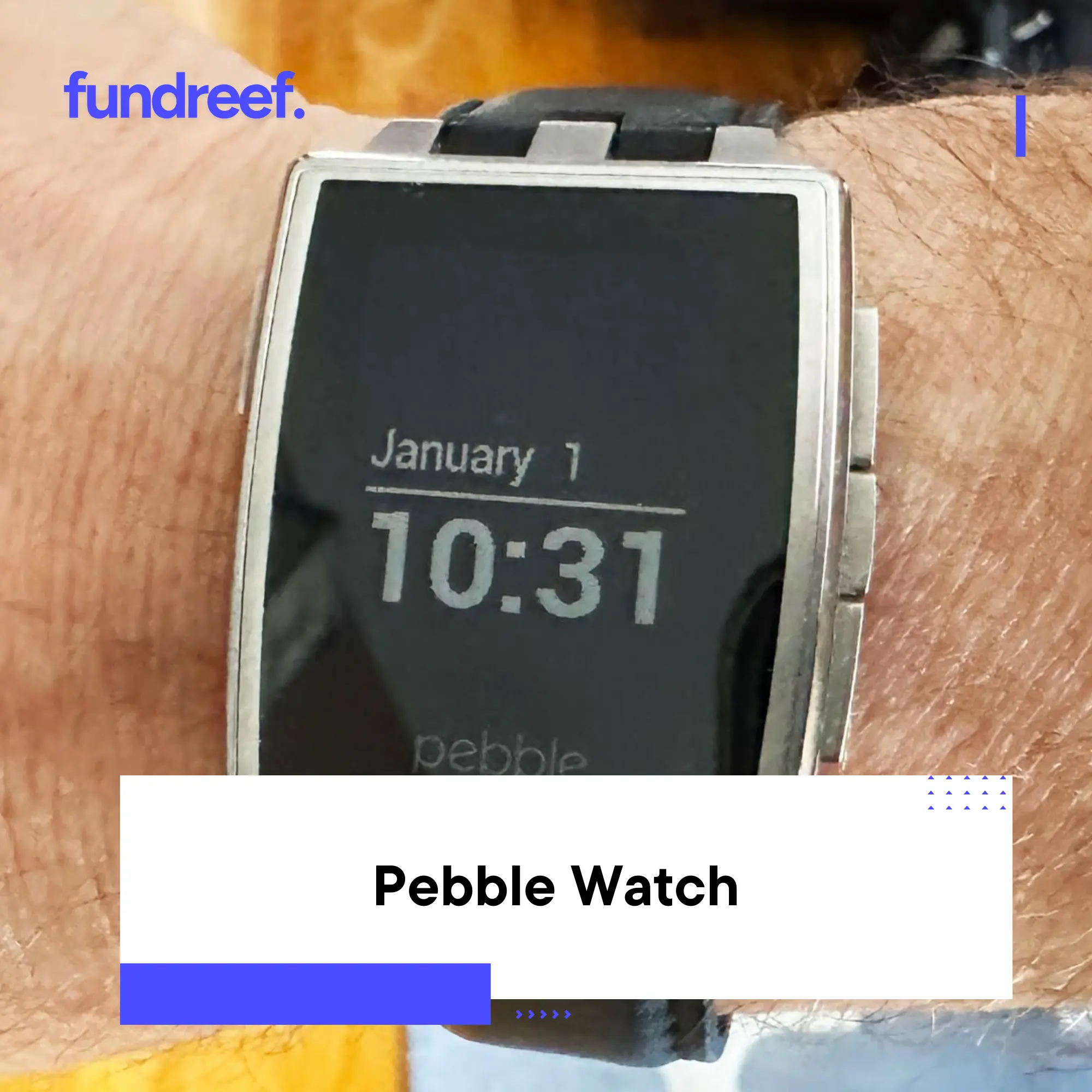
Pebble didn’t just break Kickstarter records—it rewrote the rules for hardware fundraising. In 2012, the smartwatch campaign hit $100,000 in two hours and closed at $10.3 million from nearly 70,000 backers, becoming the most-funded project in Kickstarter history. Three years later, Pebble Time raised $20.3 million in a month, shattering its own record.
These campaigns proved hardware startups could bypass VCs, validate demand in real time, and build loyal communities before manufacturing a single unit. This deep dive breaks down exactly what Pebble did right: the pre-launch strategy, campaign page structure, stretch goals, community tactics, and lessons every hardware founder should steal.
Table of Contents
- The Pebble origin story and why Kickstarter made sense
- The 2012 campaign: $10.3M in 37 days
- Pebble Time 2015: breaking their own record at $20.3M
- What made the campaigns work (strategy breakdown)
- Key lessons for hardware founders raising on crowdfunding
- Where Pebble went wrong (and eventual shutdown)
- Frequently asked questions about Pebble’s campaigns
1. The Pebble origin story and why Kickstarter made sense
1.1 From Y Combinator to crowdfunding
Eric Migicovsky founded Pebble Technology after a failed attempt at inPulse, a smartwatch for BlackBerry users developed during his time at Y Combinator in 2011. The inPulse showed promise but struggled to scale manufacturing and distribution. By early 2012, Eric and his team had refined the concept: a lightweight smartwatch with an always-on e-paper display, weeklong battery life, open SDK for developers, and seamless iPhone and Android integration.
Traditional VC funding was tough for hardware—capital-intensive, long development cycles, and massive inventory risk. Kickstarter offered a better path: validate demand before building inventory, pre-sell units to fund manufacturing, and build a community of early adopters who’d evangelize the product.
1.2 Why timing mattered
In April 2012, wearables barely existed. Fitbit was niche fitness, smartphones were exploding, and Apple Watch was three years away. Pebble saw the gap: smartwatch functionality (notifications, apps, fitness tracking) without the complexity and battery drain of full touchscreen devices. The e-paper display was the killer feature—readable in sunlight, always-on, and lasting 5–7 days per charge.
The team had working prototypes, a polished demo video, and a clear story. They set a modest $100,000 goal to fund the first production run.
2. The 2012 campaign: $10.3M in 37 days
2.1 Launch day explosion
Pebble launched on Kickstarter on April 11, 2012. Within two hours, it hit $100,000—the original goal. By day six, it crossed $4.7 million, becoming the most-funded Kickstarter project ever at that point. The campaign closed 37 days later at $10.3 million from 68,929 backers.
Key milestones:
- 2 hours: $100,000 (goal met)
- 6 days: $4.7 million (Kickstarter record)
- 37 days: $10.3 million final (nearly 70,000 backers)
The average pledge was around $150, meaning backers effectively pre-ordered the $150 retail watch at early-bird discounts ($99–$115).
2.2 What the campaign page did right
Clear value proposition: The tagline was simple: “E-Paper Watch for iPhone and Android.” The first sentence explained the problem (constant phone checking for notifications) and the solution (glance at your wrist).
Compelling demo video: A 3-minute video showed the watch in action—incoming calls, text notifications, cycling apps, customizable watch faces. Real product footage, not concept renders.
Reward tiers: Simple structure:
- $99 (first 200): One Pebble watch (limited early bird)
- $115: One Pebble watch (standard early bird)
- $220: Two watches
- $500: Five watches (for resellers/gifts)
Stretch goals: As funding climbed, Pebble announced color options (black, white, red, orange, gray), premium accessories (charging docks, extra bands), and expanded SDK documentation.
Transparency: Weekly updates on manufacturing progress, supplier negotiations, and delivery timelines. The team admitted challenges (waterproofing tests, Bluetooth certification) rather than hiding them.
2.3 Press and virality
Tech blogs exploded. The Verge, Wired, Engadget, and TechCrunch all covered Pebble within the first week. The narrative was irresistible: “Unknown startup beats Kickstarter record” combined with “First real smartwatch before Apple.” Articles drove hundreds of thousands of visitors to the campaign page.
Reddit, Hacker News, and early Twitter amplified the story. Backers shared referral links, developers discussed app ideas, and the campaign became a cultural moment in the tech community.
3. Pebble Time 2015: breaking their own record at $20.3M
3.1 Why return to Kickstarter?
By 2015, Pebble had shipped over 1 million watches and raised traditional VC funding. So why go back to Kickstarter? Community. The first campaign created 70,000 evangelists who bought early, tested beta software, built apps, and spread word-of-mouth. Pebble realized crowdfunding wasn’t just about money—it was about validation, feedback loops, and building hype before retail launch.
3.2 Pebble Time campaign performance
Launched February 24, 2015, targeting $500,000. Results:
- 17 minutes: $500,000 (goal met)
- 49 minutes: $1 million (Kickstarter record for fastest to $1M)
- 48 hours: $10.3 million
- 30 days: $20.3 million from 78,471 backers
Pebble Time became the most-funded Kickstarter campaign ever, surpassing Pebble’s own 2012 record.
3.3 What changed between 2012 and 2015
Product evolution: Pebble Time added color e-paper, thinner design, microphone for voice replies, and a refined OS with timeline UI. The pitch emphasized continuity (existing Pebble apps still worked) and innovation (new features VCs and Apple Watch couldn’t match on battery life).
Larger backers: Average pledge jumped to ~$260 (retail price $199, but many bought bundles or premium steel versions at $299).
Mature storytelling: The 2015 campaign video showed real users—runners, students, professionals—using Pebble in daily life. Less tech demo, more lifestyle narrative.
Stretch goals mastery: Unlocked features included smart accessory port, expanded color options, developer SDK enhancements, and bundled accessories. Each goal was hit within hours, sustaining momentum.
4. What made the campaigns work (strategy breakdown)
4.1 Pre-launch list building
Weeks before each launch, Pebble built email lists through teaser videos, blog posts, and social media. Thousands of subscribers got exclusive previews and early-bird alerts, creating Day 1 surge that triggered Kickstarter’s algorithm and press attention.
4.2 Prototype credibility
Pebble showed working prototypes, not concept sketches. Video footage of real watches syncing with phones, running apps, and tracking activity built trust. Hardware crowdfunding is littered with vaporware—Pebble proved they could ship.
4.3 Developer ecosystem and open platform
Pebble positioned as the “open smartwatch”—anyone could build apps and watch faces using the free SDK. This attracted developers who built hundreds of apps before retail launch, creating network effects. By 2015, over 6,500 apps existed, making Pebble more versatile than any competitor.
4.4 Community engagement and weekly updates
Pebble posted 30+ updates during the 2012 campaign, answering questions, previewing prototypes, and sharing behind-the-scenes manufacturing photos. Backers felt like insiders, not customers. This transparency built loyalty and reduced refund requests.
4.5 Strategic stretch goals
Stretch goals kept momentum alive after the initial surge. Pebble announced new goals every few days as funding milestones approached:
- Color options at $2M
- Steel edition at $5M
- Expanded SDK at $8M
Each unlock triggered social sharing (“We did it!”) and press coverage (“Pebble hits another milestone”).
5. Key lessons for hardware founders raising on crowdfunding
5.1 Validate before you build inventory
Pebble used Kickstarter to de-risk manufacturing. Instead of raising VC money to build 10,000 units and hope they sold, they pre-sold 70,000 units and used that cash to fund production. Zero inventory risk.
5.2 Build community, not just customers
Crowdfunding backers aren’t transactional buyers—they’re early adopters who want to be part of the journey. Engage them through updates, beta testing, and feedback loops. Pebble’s community became their marketing team, support forum, and app ecosystem.
5.3 Prototype quality determines trust
Hardware campaigns with renders and “coming soon” promises fail. Pebble showed working hardware, real use cases, and honest timelines. Spend the extra months getting prototypes camera-ready before launching.
5.4 Leverage press and influencer timing
Pebble coordinated launch day with tech press embargoes, ensuring The Verge, Wired, and TechCrunch all published within hours of going live. The traffic spike pushed them onto Kickstarter’s homepage, creating a virtuous cycle.
5.5 Stretch goals maintain momentum
Most campaigns surge Day 1, then flatline. Stretch goals give backers reasons to share and upgrade pledges throughout the campaign. Plan 5–7 realistic goals you can deliver, announce them progressively, and celebrate each unlock publicly.
5.6 Use crowdfunding even with VC access
Pebble Time proved you don’t need to choose between crowdfunding and VC. Use crowdfunding to validate demand, build hype, and pre-sell inventory, then use VC to scale operations. The two are complementary.
When building your investor outreach alongside a crowdfunding campaign, tools like Fundreef help identify VCs who understand hardware and crowdfunding dynamics—filter by sector (consumer electronics, wearables), stage (seed/Series A), and recent deals to build a targeted list of investors who’ll see your Kickstarter traction as validation, not a red flag.
6. Where Pebble went wrong (and eventual shutdown)
6.1 Competition from Apple and Android Wear
Despite crowdfunding success, Pebble faced brutal competition. Apple Watch launched in 2015 with massive marketing budgets, retail presence, and ecosystem lock-in. Android Wear (now Wear OS) from Google and Samsung flooded the market. Pebble’s battery life and simplicity advantages couldn’t overcome brand power.
6.2 Manufacturing and cash flow struggles
Hardware is cash-intensive. Pebble raised over $40M from VCs but burned through it on R&D, manufacturing, and inventory. By 2016, sales slowed as Apple Watch dominated. Pebble couldn’t raise another VC round and couldn’t self-sustain.
6.3 Acquisition by Fitbit and shutdown
In December 2016, Fitbit acquired Pebble’s software assets, team, and IP for ~$40M (mostly debt assumption). Pebble’s hardware line was discontinued, servers shut down by mid-2018, and the community scattered. Over 2 million Pebble watches became limited-life devices once cloud services ended.
6.4 The legacy
Pebble proved crowdfunding could launch real hardware companies, validated the smartwatch category before Apple, and showed how community-driven development works. The campaigns remain case studies in product marketing, transparency, and crowdfunding mechanics.
Frequently Asked Questions About Pebble’s Campaigns
How much did Pebble raise on Kickstarter?
Pebble’s 2012 campaign raised $10.3 million from 68,929 backers in 37 days, becoming the most-funded Kickstarter project at the time. Pebble Time (2015) raised $20.3 million from 78,471 backers, setting a new all-time record and hitting $1 million in just 49 minutes.
Why did Pebble use Kickstarter instead of VC funding?
Kickstarter let Pebble validate demand, pre-sell inventory to fund manufacturing, and build a community of early adopters—all before raising VC money. Hardware VC is risky and capital-intensive; crowdfunding de-risked the bet and proved market fit.
What made Pebble’s campaigns so successful?
Working prototypes (not renders), compelling demo videos, transparent updates, strategic stretch goals, developer ecosystem, and perfect timing (smartwatch category emerging). Tech press coverage and viral social sharing created momentum that sustained for weeks.
Why did Pebble return to Kickstarter in 2015 after raising VC money?
Community and validation. The first campaign created 70,000 evangelists who built apps, spread word-of-mouth, and provided feedback. Pebble realized crowdfunding wasn’t just funding—it was marketing, beta testing, and hype generation before retail launch.
What happened to Pebble?
Despite $40M+ in VC funding and 2 million units sold, Pebble couldn’t compete with Apple Watch and Android Wear. Fitbit acquired Pebble’s software and team in December 2016 for ~$40M. Pebble hardware was discontinued, and cloud services shut down by 2018.
What lessons should hardware founders learn from Pebble?
Validate with working prototypes, build community through transparency, use stretch goals to sustain momentum, leverage press timing, and treat crowdfunding as marketing/validation—not just funding. Also: hardware competition is brutal; even crowdfunding success doesn’t guarantee long-term survival.
