

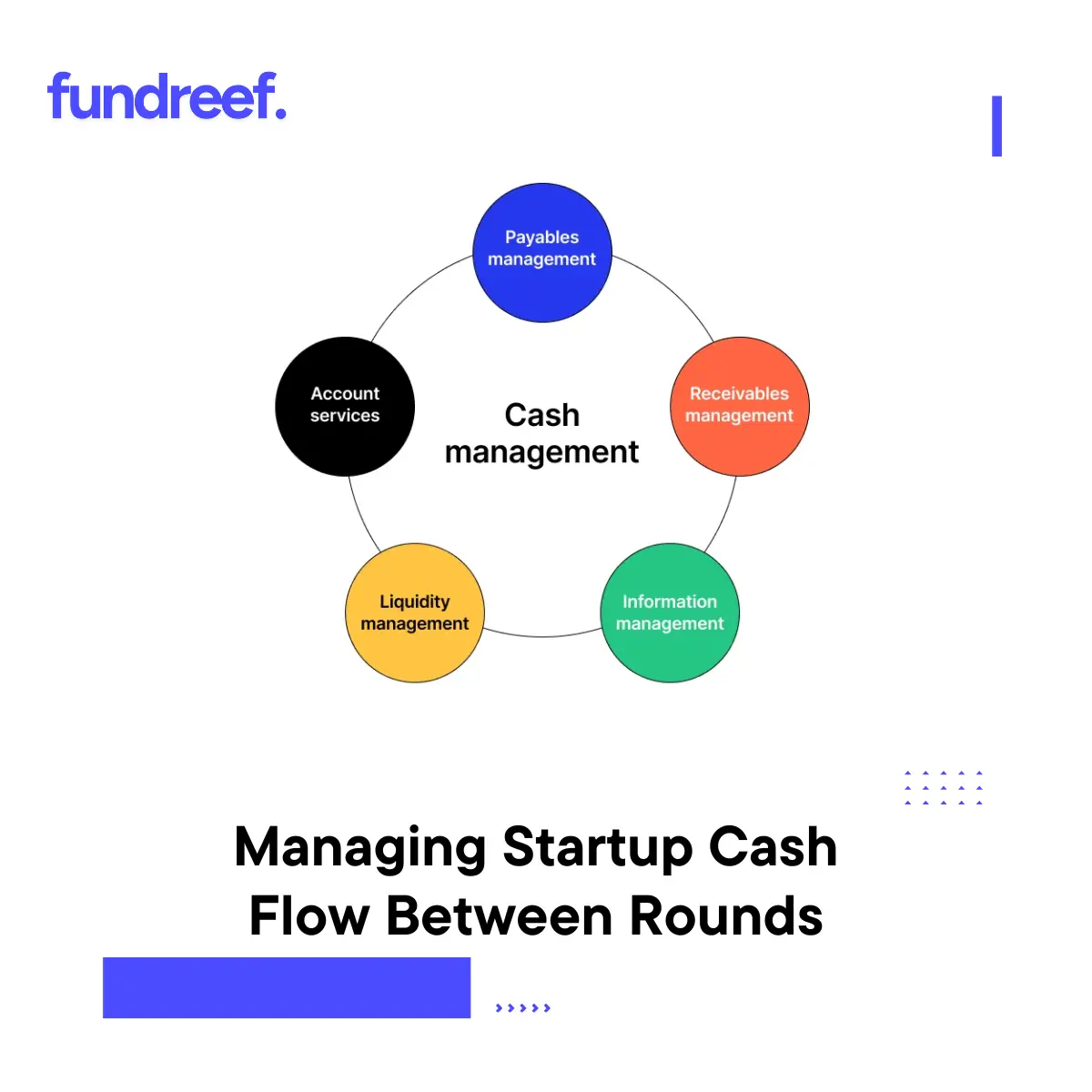
You just closed your €2M seed round. €1.8M hits your bank account after fees. You have 18 months of runway at €100K monthly burn. Life is good. Month 9: revenue growth slows, a key hire quits, AWS bill spikes 40%. Burn jumps to €140K. Runway shrinks to 9 months. Panic sets in.
Month 12: You start Series A conversations. Growth reaccelerates. Investors love the story. Month 15: Term sheets arrive. Month 17: Lead investor’s diligence uncovers “accounting irregularities.” Deal dies. Month 18: Cash hits zero. Game over.
This happens to 40% of seed-funded startups. They celebrate the close, ignore cash discipline, then scramble when the next round takes longer than expected. Managing cash flow between rounds isn’t accounting—it’s survival. This guide reveals exactly how to stretch runway 20-50%, spot cash traps before they hit, and structure operations so you always have 6+ months buffer during fundraising.
Table of Contents
- Why Cash Flow Kills More Startups Than Revenue
- The 18-Month Runway Myth (And What Actually Matters)
- Cash Flow Forecasting: Build the Right Model
- The Big Four Cash Traps That Destroy Runway
- Revenue Optimization: Squeeze More Cash from Existing Customers
- Cost Levers: Where to Cut Without Killing Growth
- Hiring Discipline: Headcount Without Cash Suicide
- Debt and Bridge Options: When They Make Sense
- The “Fundraise Early” Cash Buffer Strategy
- Frequently Asked Questions About Startup Cash Flow
Why Cash Flow Kills More Startups Than Revenue
70% of startups fail from cash exhaustion, not lack of product-market fit. Founders celebrate €2M raised but ignore the brutal math: fundraising takes 4-8 months on average. Hiring ramps burn 2-3x faster than revenue grows. “One-time” costs recur.
Revenue matters, but cash timing kills:
- January rent hits before February revenue
- New sales reps paid before they ramp
- Annual SaaS contracts paid upfront
- Tax bills arrive quarterly
Your P&L shows €50K monthly profit. Your cash hits zero because Q1 revenue was prepaid, Q2 expenses deferred. Cash flow is reality. P&L is fiction.
The 18-Month Runway Myth (And What Actually Matters)
“18 months runway” assumes constant burn. Reality: burn triples as you hire. Revenue lags 3-6 months behind spend.
Real Runway Math
| Month | Revenue | Burn | Cash Burn | Cumulative Cash | Runway Remaining |
|---|---|---|---|---|---|
| 1 | €30K | €100K | -€70K | €1.93M | 19 months |
| 6 | €80K | €140K | -€60K | €1.4M | 10 months |
| 12 | €150K | €200K | -€50K | €800K | 4 months |
| 18 | €300K | €250K | +€50K | €850K | ∞ |
Key insight: Runway shortens fastest between months 4-12 as hiring ramps but revenue lags.
Survival rule: Always maintain 6 months cash buffer when starting to fundraise. Start conversations at 10 months remaining.
Cash Flow Forecasting: Build the Right Model
Your cash model lives in one tab: monthly cash in, cash out, ending balance.
Core Cash Flow Structure
Starting Cash (Month 1)
- Revenue (actuals + 30-day forecast)
- New funding (if any)
- Operating expenses (actuals + forecast)
- Capital expenditures (hiring, equipment)
= Ending Cash
Forecast 12 months out:
- Revenue: Historical growth + pipeline
- Expenses: Fixed + variable by category
- Hiring: Detailed by role and ramp timing
Weekly reconciliation: Compare forecast vs actual. Adjust immediately.
The “Cash Critical Path”
Rank expenses by impact on runway:
| Priority | Category | Cuttable? | Impact on Revenue |
|---|---|---|---|
| 1 | Payroll | Hard | High |
| 2 | Marketing | Medium | High |
| 3 | Cloud/Tech | Medium | Medium |
| 4 | Office | Easy | Low |
| 5 | Legal/Compliance | Hard | Low |
Payroll = 70% of burn. Cloud = 10%. Office = 2%. Focus cuts where leverage is highest.
The Big Four Cash Traps That Destroy Runway
Trap 1: Hiring Ramp Too Fast
You hire 3 sales reps month 3. Revenue doesn’t accelerate until month 9. Each rep costs €120K/year all-in.
| Scenario | Hire Timing | Revenue Impact | Cash Impact |
|---|---|---|---|
| Aggressive | Month 3 | €300K MRR by M12 | -€360K |
| Conservative | Month 6 | €250K MRR by M12 | -€180K |
Fix: Hire revenue-first. Sales > marketing > product. Delay non-revenue hires.
Trap 2: “Free” Software Trials Become Paid
€20K MRR → 20 trials → €40K/month new SaaS (HubSpot, Salesforce, Intercom, etc.).
Monthly SaaS creep:
- Month 1: €5K
- Month 12: €25K
Fix: Quarterly SaaS audit. Cancel unused tools. Negotiate annual discounts.
Trap 3: Revenue Recognition Delays Cash
€100K annual contract signed month 1. Cash arrives month 1. Revenue recognized €8.3K/month.
P&L shows growth. Cash shows spike then flatline.
Fix: Prioritize annual prepays. Offer 10% discount for upfront payment.
Trap 4: “One-Time” Costs Recur
€50K marketing event. €30K hiring recruiter. €20K consultant. Total: €100K “one-time.”
Reality: Events quarterly. Recruiters monthly. Consultants ongoing.
Fix: Budget 20% of “one-time” as recurring. Force categorization discipline.
Revenue Optimization: Squeeze More Cash from Existing Customers
Cut costs 20%. Grow revenue 20%. Cash impact is 40% (less burn + more inflows).
Tactic 1: Net Revenue Retention (NRR) > 110%
| Customer | Year 1 Spend | Year 2 Spend | NRR |
|---|---|---|---|
| A | €12K | €18K | 150% |
| B | €24K | €20K | 83% |
| C | €6K | €10K | 167% |
| Average | 120% |
How Celonis hit 140% NRR:
- Module expansion (procurement → finance)
- Seat expansion (5 users → 25 users)
- Price increases (5% annual)
Your playbook:
- Monthly expansion calls
- Annual contract repricing
- Feature-gated upsells
Tactic 2: Accelerate Cash Collections
| Term | DSO | Cash Impact |
|---|---|---|
| Net 30 | 45 days | Baseline |
| Net 15 | 25 days | +€50K |
| Prepay | Day 0 | +€150K |
Annual prepay incentives:
- 10% discount for upfront payment
- Quarterly True-Ups (refund unused credits)
Tactic 3: Pause Low-ROI Experiments
| Channel | CAC | LTV | ROI |
|---|---|---|---|
| Content | €2K | €20K | 10x |
| Paid FB | €3K | €15K | 5x |
| Events | €10K | €8K | 0.8x |
Kill channels <3x LTV/CAC. Reallocate to winners.
When modeling cash flow scenarios and optimizing NRR strategies to extend runway between funding rounds, detailed financial forecasting becomes essential to identify high-leverage revenue levers. Fundreef’s AI company valuation tool helps you simulate different collection terms, expansion scenarios, and cost optimizations to maximize cash runway.
Cost Levers: Where to Cut Without Killing Growth
Payroll Optimization (70% of Burn)
| Role Type | Salary Cut Options | Non-Cash Alternatives |
|---|---|---|
| Senior IC | 20% salary cut | 50% equity bump |
| Mid-level | Contractors first | Part-time senior advisors |
| Junior | Delay hiring | Outsource non-core |
Remote-first hiring: Berlin dev €80K vs London €120K. Same output.
Marketing Efficiency
| Channel | Efficiency Hacks |
|---|---|
| Paid Ads | Pause bottom 30% performers |
| Content | Repurpose top 20% assets |
| Events | Virtual > in-person |
CAC payback target: <12 months. Anything longer = kill.
Tech Stack Rationalization
SaaS audit checklist:
Active users >10/week? → Keep
Paid <€500/mo? → Negotiate/downgrade Unused >30 days? → Cancel
Duplicates? → Consolidate
Average savings: 25-40% of SaaS spend.
Hiring Discipline: Headcount Without Cash Suicide
Revenue-Linked Hiring
| Revenue Milestone | Hire Priority |
|---|---|
| €0-€20K MRR | No hires |
| €20K-€50K | 1st sales rep |
| €50K-€100K | 2nd sales + CS |
| €100K+ | Marketing lead |
Ramp timing: Sales rep revenue starts month 4, full quota month 6.
Contractor vs Full-Time Math
| Role | Contractor | Full-Time | Breakeven |
|---|---|---|---|
| Sales | €10K/mo | €12K/mo | 6 months |
| Design | €8K/mo | €10K/mo | 4 months |
| Dev | €12K/mo | €15K/mo | 8 months |
Rule: Contractors until revenue proves demand. Full-time only for core functions.
Debt and Bridge Options: When They Make Sense
Revenue-Based Financing (RBF)
| Provider | Rate | Term | Good For |
|---|---|---|---|
| Pipe | 4-8% | 12 months | Predictable SaaS |
| Silvr | 2-5% | 6-12 months | E-commerce |
Math: €100K MRR growing 20%/mo → €300K available at 5% fee.
Venture Debt
| Lender | Amount | Terms | Dilution |
|---|---|---|---|
| Silicon Valley Bank | 25-35% of round | 36 months, 10-12% | 1-2% warrant |
| Hercules | 30-50% of round | 48 months | 1.5-3% |
Use when: 12+ months ARR, €1M+ revenue, raising equity soon.
Avoid when: Pre-PMF, declining revenue, no equity round planned.
The “Fundraise Early” Cash Buffer Strategy
Month 10 strategy (6 months before cash out):
- Start VC conversations (no urgency)
- Share monthly updates (build relationships)
- Hit fundraising trigger (ARR milestone, growth inflection)
- Close 4-6 months later with buffer
Triggers to accelerate:
- ARR growth >30% QoQ
- NRR >120%
- CAC payback <12 months
Frequently Asked Questions About Startup Cash Flow
How much runway should I have before fundraising?
10 months minimum when starting conversations. 6 months when term sheets arrive. Cash always takes longer to close than expected.
What’s more important: revenue growth or runway extension?
Runway first. Revenue without cash kills you faster than slow growth with discipline.
Should I cut marketing spend to extend runway?
Only low-ROI channels. Pause <3x LTV/CAC. Double down on winners.
When should I take venture debt?
Post-€1M ARR, raising equity within 12 months. Never as primary capital.
How do I forecast cash accurately?
Weekly actuals vs monthly forecasts. Reconcile every Friday. Adjust hiring/marketing immediately.
What’s the biggest cash flow mistake founders make?
Hiring before revenue ramps. One sales rep costs €120K/year. Revenue lags 4-6 months.
Can I survive 24+ months between rounds?
Yes, if NRR >110% and burn <30% of ARR. Most need capital every 18-24 months.
