

Analyze the legendary 15-slide deck Drew Houston used to raise Dropbox’s seed round in 2007—before the product existed. Learn why simplicity beats complexity, how to pitch without traction, and the counterintuitive strategies that turned a “solved problem” into a $10B company.
Drew Houston had a problem in 2007. He kept forgetting his USB drive. File-sharing services existed—YouSendIt, Box, FTP servers—but they were clunky. What if files just “synced” across devices automatically? What if you never had to think about it?
He built a prototype, created a 15-slide pitch deck, and submitted to Y Combinator. The deck was absurdly simple. No fancy graphics. No market research charts. No competitive analysis matrices. Just plain text on white backgrounds, explaining the problem and solution in the most direct way possible.
That deck raised Dropbox’s seed funding. Within three years, Dropbox hit 50 million users. By 2018, the company went public at an $8.2 billion valuation. Today, Dropbox has over 700 million registered users and generates $2.5 billion in annual revenue.
But here’s the twist: the pitch deck itself was unremarkable. It violated almost every modern pitch deck “rule.” No team slide. No financial projections. No fancy design. And yet it worked. This breakdown reveals exactly why simplicity beat sophistication—and what founders can learn from the most effective minimalist pitch in startup history.
The Context: 2007, Before Cloud Storage Was Obvious
To understand why Dropbox’s deck worked, you need to understand the market in 2007.
The world before Dropbox:
- USB drives were standard: People carried thumb drives everywhere. “Did you bring the file?” was a common refrain in meetings.
- Email attachments ruled: People emailed files to themselves to access them from different computers.
- File-sharing was painful: FTP required technical knowledge. YouSendIt had file size limits. Box.net existed but was clunky.
- Syncing was manual: No service automatically kept your files updated across devices.
- Cloud storage was emerging: Amazon S3 launched in 2006. Google Docs was in beta. But “cloud storage” wasn’t yet mainstream.
Most importantly: investors didn’t think file storage was a big opportunity. The common refrain was: “This problem is already solved. Why do we need another file-sharing service?”
Drew Houston faced skepticism from day one. How do you convince investors that a “solved” problem is actually unsolved? How do you pitch cloud storage before people even understand the cloud?
The answer: Keep it so simple that a 10-year-old would understand it.
The Dropbox Pitch Deck: Slide-by-Slide Breakdown
Dropbox’s original Y Combinator pitch deck contained approximately 15 slides. Unlike most modern decks, it was text-heavy and design-light. Here’s what each slide communicated:
Slide 1: Title Slide
What it said: “Dropbox”
That’s it. No tagline. No logo. No fancy branding. Just the name on a plain background.
Why it worked: No distraction. The name itself was memorable—easy to say, easy to spell, immediately understandable (you “drop” files into a “box”).
Slide 2: The Problem
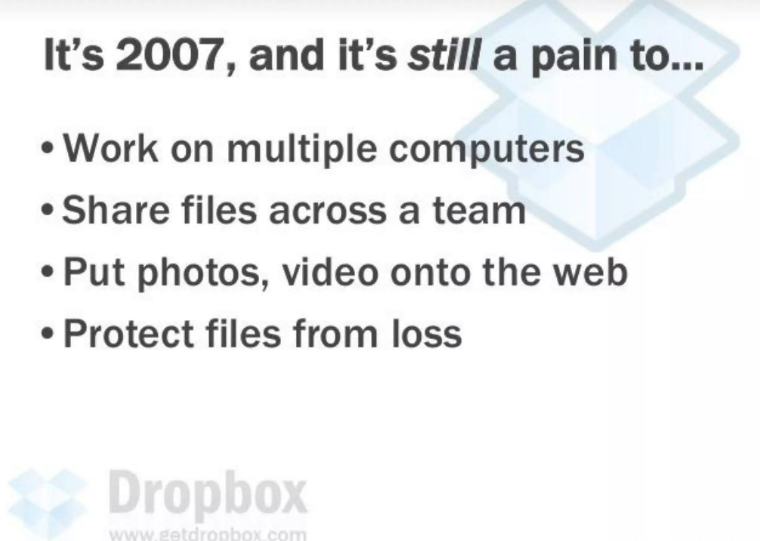
What it said: “Take your files anywhere. It should be easier.”
The slide listed common frustrations:
- Emailing files to yourself
- Carrying USB drives
- Losing files when computers crash
- Version control nightmares (which file is the latest?)
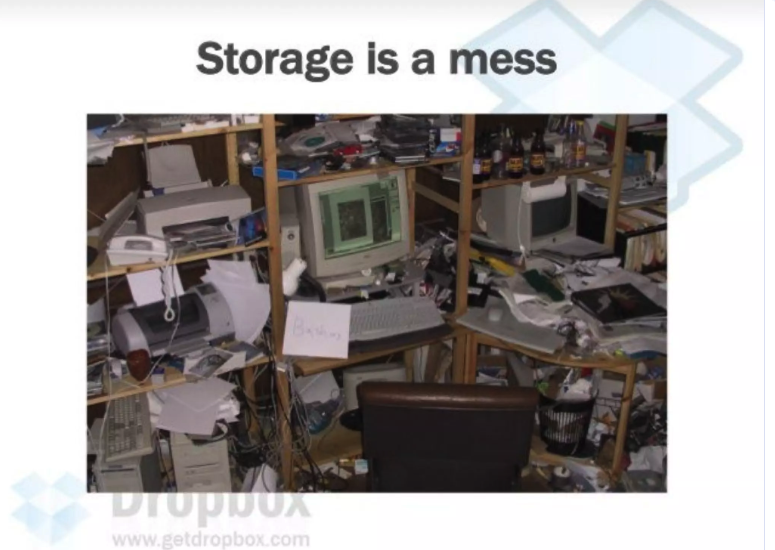
Why it worked: Houston didn’t explain file storage academically. He listed visceral, relatable frustrations. Every person in the room (including investors) had experienced these pain points. This wasn’t theoretical—it was personal.
Slide 3: Existing Solutions (and Why They Suck)
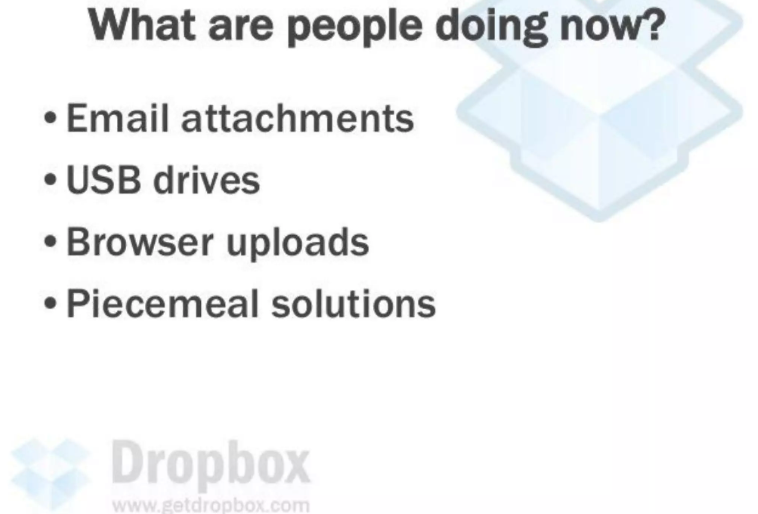
What it said: “Current solutions are broken.”
The slide listed competitors:
- USB drives: You lose them, they break, you forget them
- Email: File size limits, version confusion, inbox clutter
- File-sharing services (YouSendIt, etc.): Manual uploads, not automatic, clunky interfaces
Why it worked: Houston acknowledged competitors head-on but showed why none of them actually solved the problem. This preempted investor objections: “What about [existing service]?” He already explained why they didn’t work.
Slide 4: The Solution
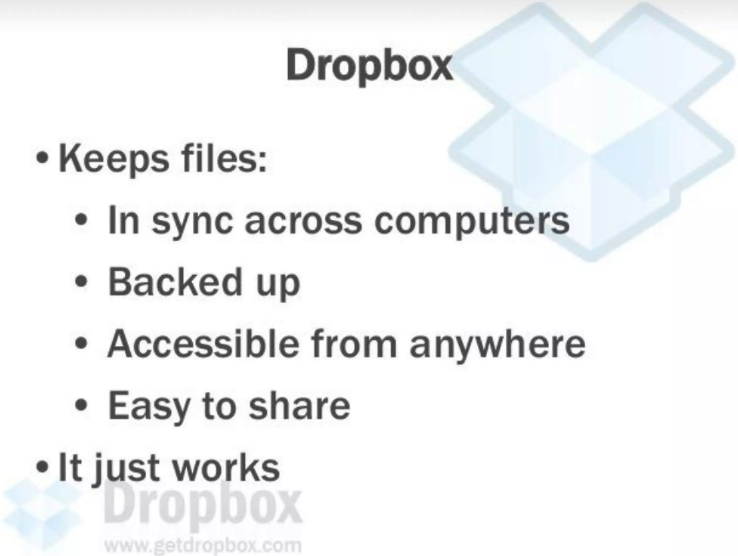
What it said: “Dropbox: It just works.”
The slide described the core concept:
- Install Dropbox
- Drag files into a folder
- Files automatically sync across all your devices
- No manual uploads. No thinking. It just happens.
Why it worked: The solution was described in 30 seconds. No technical jargon. No explanation of how it worked technically. Just the user experience: simple, automatic, effortless.
Slide 5: How It Works (The Magic)
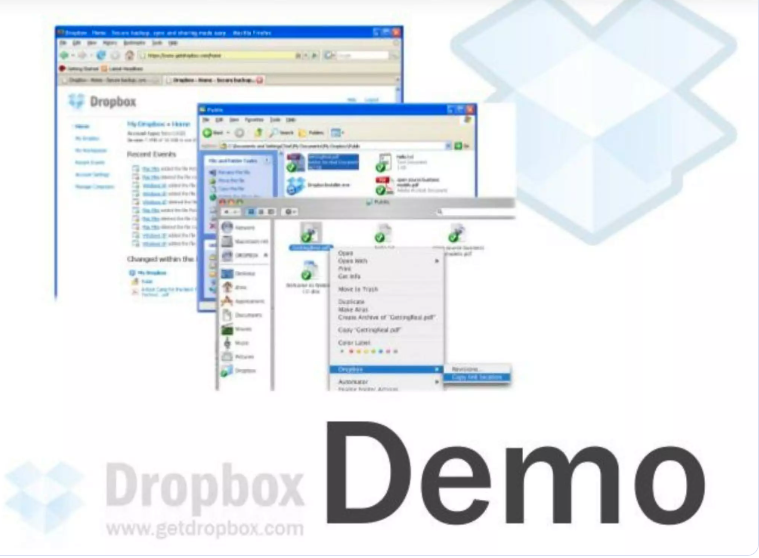
What it said: Visual diagram showing:
- User drags file into Dropbox folder on Computer A
- File uploads to cloud
- File automatically appears on Computer B, phone, and web
Why it worked: One simple diagram conveyed the entire product. Investors could visualize the experience immediately. No need to explain “syncing algorithms” or “cloud infrastructure.” Just show it.
Slide 6: Key Differentiators
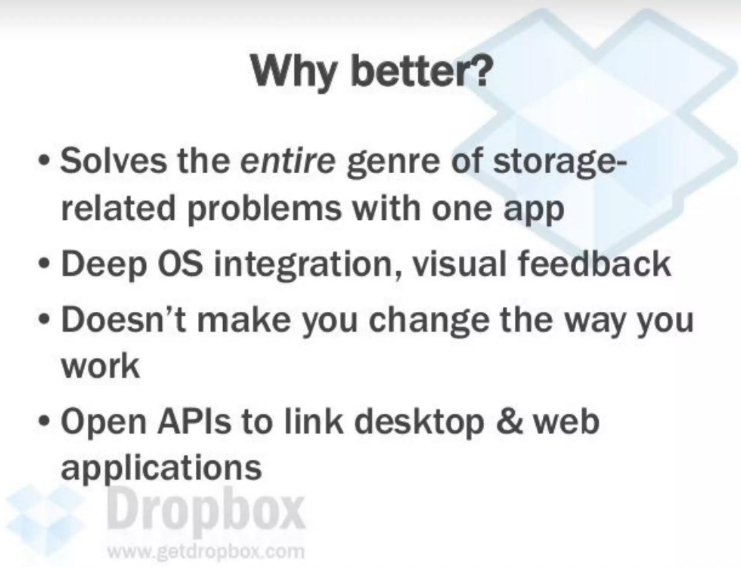
What it said: “Why Dropbox wins:”
- Automatic: No manual uploads. Set it and forget it.
- Fast: Files sync in seconds, not minutes.
- Reliable: Never lose files again.
- Cross-platform: Works on Mac, Windows, Linux, mobile.
- Simple: Grandma could use it.
Why it worked: Clear, concrete differentiators. Not vague claims like “better user experience.” Specific features that matter: automatic, fast, reliable.
Slide 7: Use Cases
What it said: “Who uses Dropbox?”
- Freelancers collaborating with clients
- Students sharing notes and projects
- Families sharing photos
- Remote teams working on documents
- Individuals backing up important files
Why it worked: Houston demonstrated broad appeal. This wasn’t a niche product for one audience—it solved a universal problem. Everyone needs file storage.
Slide 8: Market Size (Kept Simple)
What it said: “TAM: Billions of people with files.”
No complex charts. No market research citations. Just the obvious fact: everyone who uses a computer has files. Everyone is a potential customer.
Why it worked: Houston avoided the trap of over-researching market size. Instead, he stated the obvious: the market is “everyone.” Investors got it instantly.
Slide 9: Business Model
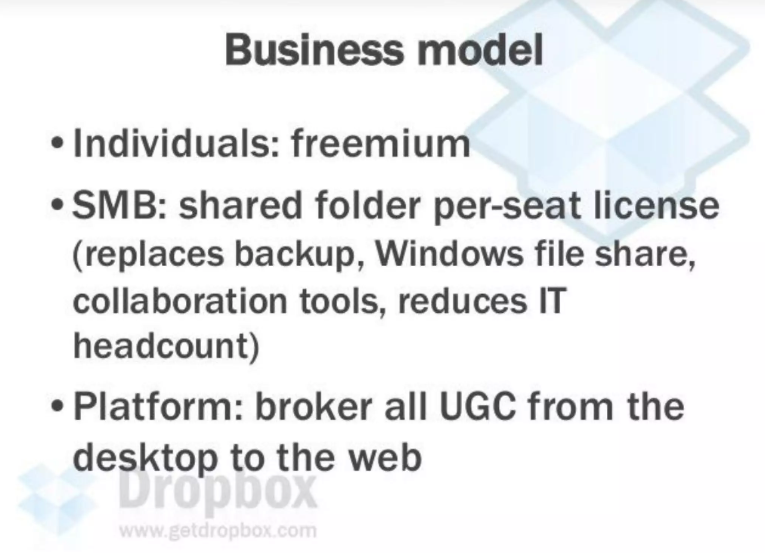
What it said: “Freemium: Free for 2GB, paid for more.”
- Free tier: 2GB storage
- Paid tier: $10/month for 50GB (later adjusted)
- Revenue scales as users add more files
Why it worked: Clear, proven model. Freemium was already validated by companies like Skype and LinkedIn. Investors understood this immediately.
Slide 10: Traction (The Weakest Slide)
What it said: “Private beta: X users signed up.”
Dropbox had minimal traction at the time of the Y Combinator pitch—maybe a few hundred beta signups. This was the weakest part of the deck.
Why it didn’t matter: The problem was so relatable and the solution so obvious that investors bet on the team and vision, not traction. Plus, Houston compensated with the demo video (more on this below).
Slide 11-12: Competition (Brutally Honest)
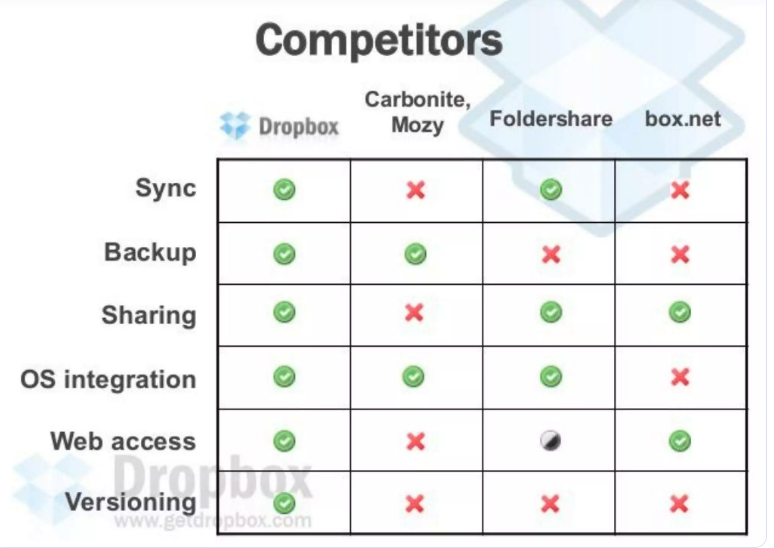
What it said: List of competitors (Box, YouSendIt, FTP, etc.) with honest assessment:
- Box: Enterprise-focused, complicated
- YouSendIt: Manual uploads, not automatic
- FTP: Technical, requires expertise
- USB drives: Physical, loseable
Why it worked: Houston didn’t pretend competitors didn’t exist. He showed deep understanding of the landscape and explained why Dropbox’s approach (automatic syncing) was fundamentally different.
Slide 13: Go-to-Market
What it said: “Viral growth through referrals.”
- Free users invite friends to get more storage
- Word-of-mouth drives adoption
- Low customer acquisition cost (CAC)
Why it worked: Simple, capital-efficient growth strategy. Investors love businesses that grow organically without expensive marketing.
Slide 14: The Ask
What it said: “Seeking $X for Y% equity.”
Clear ask. No games, no vague language. Just: “We need this much capital for this much equity.”
Slide 15: Thank You / Contact
What it said: Drew’s email and the Dropbox website.
Simple closer. Invited follow-up.
What Made the Dropbox Deck Different (And Why It Worked)
Most modern pitch decks are 12-15 slides with heavy design, multiple fonts, charts, graphs, and complex visuals. Dropbox’s deck was the opposite. Here’s why it worked:
Reason 1: The Problem Was Universal and Immediate
Every single investor had experienced file-storage frustration. Houston didn’t need to explain the problem—he just reminded them. When the problem is that relatable, you don’t need elaborate storytelling.
Lesson: If your problem is universal, keep it simple. Don’t over-explain. Just remind investors it exists.
Reason 2: The Solution Was Dead Simple
“Drag file into folder. File syncs everywhere.” That’s it. No technical complexity. No confusing features. Just a clear, obvious solution.
Lesson: If your solution can be explained in one sentence, do it. Complexity creates confusion. Simplicity creates clarity.
Reason 3: Dropbox Compensated with a Demo Video
Here’s the secret weapon that made the deck work: Houston created a 3-minute demo video showing Dropbox in action. He posted it on Hacker News and it went viral.
The video showed:
- A user dragging a file into the Dropbox folder
- The file appearing instantly on another computer
- The magic of automatic syncing
The video gained 75,000 signups overnight. Beta waitlist exploded from 5,000 to 75,000 in 24 hours. The video did what the deck couldn’t: prove the product worked and people wanted it.
Lesson: If you can’t show traction with numbers, show it with proof of demand. A viral demo, waitlist explosion, or customer testimonials can substitute for revenue metrics at early stages.
Reason 4: Investors Bet on the Founder
Drew Houston was technical (MIT grad, built the prototype himself), articulate, and obsessed with the problem. He’d personally experienced the pain point hundreds of times. Investors bet on his ability to execute.
Lesson: At seed stage, investors bet on founders more than ideas. Show you’re the right person to solve this problem.
Reason 5: Timing Was Perfect
Cloud storage was emerging but not yet mainstream. Dropbox was early but not too early. Smartphones were growing (iPhone launched in 2007). Bandwidth was improving. The infrastructure was ready.
Lesson: Timing matters. Dropbox couldn’t have succeeded in 2002 (no cloud infrastructure) or 2015 (too late, Google Drive and iCloud existed). The 2007-2010 window was perfect.
What Dropbox Left Out (And Why It Didn’t Matter)
Modern pitch decks include slides that Dropbox skipped entirely. Here’s what was missing—and why it didn’t hurt:
Missing: Team Slide
Most decks include a team slide showing founders’ backgrounds, credentials, and expertise. Dropbox’s deck had none of this.
Why it didn’t matter: Drew Houston pitched in person. Investors could ask about his background during the conversation. At seed stage, the founder is the team.
Missing: Financial Projections
No revenue projections. No five-year financial model. No TAM/SAM/SOM breakdown. Just “freemium model” and move on.
Why it didn’t matter: At pre-revenue stage, financial projections are fiction. Investors know this. Dropbox focused on product-market fit, not speculative spreadsheets.
Missing: Traction Metrics
Dropbox had minimal users when it pitched. No MRR. No growth charts. Just “beta signups.”
Why it didn’t matter: The demo video proved demand better than any chart could. 75,000 signups in 24 hours was traction.
Missing: Roadmap
No product roadmap. No feature list. No explanation of future development.
Why it didn’t matter: The core product was so clear that a roadmap wasn’t needed. Investors understood: build syncing, then add features.
Finding the right investors for your stage and sector is crucial. Fundreef provides a searchable database of 10,000+ active VCs, angels, and funds—filtered by geography, check size, and industry focus. Stop sending blind emails and start connecting with investors actually writing checks in your space.
The Famous Demo Video: Why It Mattered More Than the Deck
Drew Houston’s demo video is one of the most legendary pieces of startup marketing ever created. Posted to Hacker News in 2008, it wasn’t a slick production—just a screencast showing Dropbox syncing files across devices.
What Made the Video Work
1. It showed, not told: Instead of describing syncing, Houston demonstrated it. File appeared on one computer, then magically appeared on another. Instant understanding.
2. It included Easter eggs for geeks: The video included inside jokes and references that resonated with Hacker News users (the target early adopter audience). Files named after memes, references to Reddit and Digg. This made tech-savvy users feel “in on the joke.”
3. It proved the product existed: Many investors assumed Dropbox was vaporware. The video proved it worked.
4. It was authentic: No marketing polish. Just a guy screen-recording his product. This authenticity resonated with Hacker News culture.
The Results
The video drove 75,000 beta signups in 24 hours. The waitlist went from 5,000 to 75,000 overnight. This traction validated product-market fit better than any market research.
Lesson: If you’re pitching a product people don’t understand, show it. A 2-minute demo video beats 10 slides of explanation.
Lessons Modern Founders Can Steal from Dropbox
Lesson 1: Simplicity Wins When the Problem Is Obvious
If your problem is universal (everyone experiences it), you don’t need elaborate storytelling. Just remind investors it exists and show your solution.
When to use this approach:
- Pain point is widely experienced
- Solution is easy to understand
- Existing solutions clearly fail
When NOT to use this approach:
- You’re solving a niche B2B problem
- Your solution requires technical explanation
- The problem isn’t immediately obvious
Lesson 2: Demo > Explanation
Dropbox succeeded because Houston showed the product, not just described it. A 3-minute video did more than 100 slides could.
Your move: If you have a working product (or even a prototype), record a demo video. Show it during your pitch or include a link in your deck.
Lesson 3: Acknowledge Competitors Honestly
Houston didn’t ignore competition. He listed every competitor and explained why they didn’t solve the problem. This built credibility.
Your move: Don’t pretend competitors don’t exist. Acknowledge them, then explain why your approach is different or better.
Lesson 4: Keep the Business Model Simple
Dropbox’s freemium model was explained in one sentence: “Free for 2GB, paid for more.” No complex pricing tiers. No confusing monetization strategies.
Your move: If your business model can be explained in one sentence, stop there. Complexity raises questions. Simplicity builds confidence.
Lesson 5: Focus on Product-Market Fit, Not Features
Dropbox didn’t list 50 features. It explained one core experience: files sync automatically. That’s it.
Your move: Don’t overwhelm investors with feature lists. Explain the core value proposition in the simplest possible terms.
Lesson 6: Viral Growth Beats Paid Marketing
Dropbox’s referral program (invite friends, get more storage) drove millions of users at near-zero CAC. This capital efficiency impressed investors.
Your move: If you can design viral or organic growth into your product, emphasize this. Investors love businesses that grow without expensive marketing.
Lesson 7: Design Doesn’t Matter at Seed Stage (But Clarity Does)
Dropbox’s deck had minimal design. Plain text. White backgrounds. No fancy graphics. But every slide was crystal clear.
Your move: Don’t obsess over design at seed stage. Obsess over clarity. Can a 12-year-old understand your deck? If yes, the design is good enough.
How Dropbox’s Deck Would Look Today (And Why It Wouldn’t Work)
If Dropbox pitched in 2025, the deck would be different. Here’s what would change:
What Would Be Added
1. Team Slide
Modern investors expect a team slide showing founder backgrounds, expertise, and why this team can execute.
2. Traction Metrics
Even at pre-revenue stage, investors expect some signal: beta signups, waitlist, letters of intent, design partners, anything showing demand.
3. Competitive Landscape
A visual matrix comparing Dropbox to competitors across key dimensions (automatic syncing, speed, price, platforms).
4. Go-to-Market Plan
More detail on customer acquisition: which channels, what CAC, what conversion rates, what growth projections.
5. Financials (Even High-Level)
Basic revenue projections showing path to $10M ARR in 3-5 years.
What Would Stay the Same
1. Problem Slide: Still simple, still relatable.
2. Solution Slide: Still one sentence: “Files sync automatically.”
3. Demo: Still the most powerful part of the pitch.
Why the 2007 Approach Wouldn’t Work in 2025
1. More competition: In 2025, cloud storage is saturated (Google Drive, iCloud, OneDrive, Box). You’d need clearer differentiation.
2. Higher expectations: Investors expect metrics at seed stage now. “We have beta signups” isn’t enough—they want MRR, retention, growth rate.
3. Bigger rounds: Seed rounds in 2025 average $2M-$5M. In 2007, Dropbox raised ~$300K. Bigger rounds = higher expectations.
Dropbox’s Fundraising Journey: From Seed to IPO
Seed Round (2007): $1.2M
Investors: Y Combinator, Sequoia Capital (seed extension)
Valuation: Not disclosed
Traction: Beta with a few thousand users
Why they raised: Build product, validate product-market fit, hire first engineers.
Series A (2008): $6M
Investors: Sequoia Capital (lead)
Valuation: ~$25M post-money
Traction: 1 million users
Why they raised: Scale infrastructure, expand team, accelerate growth.
Series B (2011): $250M
Investors: Index Ventures, Sequoia, Accel, Goldman Sachs
Valuation: $4 billion
Traction: 50 million users
This was one of the largest Series B rounds in history at the time. Dropbox went from scrappy startup to tech giant overnight.
IPO (2018): $756M Raised
Valuation: $8.2 billion at IPO
Revenue: $1.1 billion annually
Users: 500 million registered
Dropbox went public 11 years after its founding, proving that simple ideas executed well can build billion-dollar businesses.
Common Misconceptions About the Dropbox Deck
Misconception #1: “It was perfect because it was simple”
False. The deck was simple because the problem was simple. If Dropbox were solving enterprise workflow automation, the deck would need more complexity.
Lesson: Match complexity to the problem. Simple problem = simple deck. Complex problem = detailed explanation.
Misconception #2: “Design doesn’t matter”
Partially false. Dropbox’s deck had minimal design, but it was still clean and readable. Bad design (unreadable fonts, cluttered slides, confusing layouts) still hurts.
Lesson: You don’t need fancy design, but you do need clarity.
Misconception #3: “You can pitch with no traction”
Partially true. Dropbox pitched with minimal revenue traction, but they had demand traction (viral demo video, 75,000 signups). Modern investors expect some signal of demand.
Lesson: If you don’t have revenue, show waitlist, beta signups, pilot customers, or design partners.
Misconception #4: “The deck alone raised the money”
False. The deck got meetings. The demo video proved demand. Drew Houston’s credibility closed the deal. No single element did it alone—it was the combination.
Lesson: Your deck, demo, traction, and founder story must all support each other.
Frequently Asked Questions
Why was Dropbox’s pitch deck so simple compared to modern decks?
Dropbox’s pitch deck was simple because the problem (file storage and syncing) was universally understood and relatable. Drew Houston didn’t need elaborate explanations—everyone had experienced the pain of lost files or USB drives. The simplicity worked because the product solved an obvious problem in an obvious way. Modern decks are more complex because competition is fiercer and investors expect deeper market analysis, traction metrics, and differentiation.
Did Dropbox have any traction when they first pitched investors?
Dropbox had minimal traction during their Y Combinator pitch in 2007—only a few hundred beta users. However, Drew Houston’s demo video on Hacker News generated 75,000 beta signups in 24 hours, proving massive demand. This waitlist explosion became their traction story and helped them raise their seed round. The lesson: early-stage investors bet on signals of demand, not just revenue.
What made Dropbox’s demo video so effective?
The demo video showed the product in action rather than describing it. Houston screen-recorded files syncing automatically across devices, making the magic instantly understandable. He also included Easter eggs and inside jokes for Hacker News users (his target early adopters), creating viral appeal. The video proved the product worked and generated 75,000 signups overnight—validating product-market fit better than any pitch deck could.
Could a founder use Dropbox’s minimalist approach today?
It depends on the problem and market. If you’re solving a universally understood problem with a simple solution, minimalism can work. But modern investors expect more: traction metrics, competitive analysis, team backgrounds, and go-to-market strategy. You can keep slides simple and visual, but you’ll need more depth than Dropbox’s 2007 deck. The core lesson—clarity over complexity—still applies.
What was the biggest weakness in Dropbox’s pitch deck?
The biggest weakness was lack of traction slides. Dropbox had minimal users and no revenue when they pitched. Modern investors would struggle with this. However, Dropbox compensated with the demo video that proved massive demand (75,000 signups in 24 hours). The lesson: if you lack traditional traction (revenue, users), show alternative signals like waitlist growth, pilot commitments, or viral demand.
How much money did Dropbox raise with their original pitch deck?
Dropbox’s original Y Combinator pitch helped them secure approximately $1.2 million in seed funding in 2007-2008, including Y Combinator’s initial investment and a seed extension from Sequoia Capital. This was considered a strong seed round for the time. The company went on to raise over $600 million across multiple rounds before going public in 2018 at an $8.2 billion valuation.
