

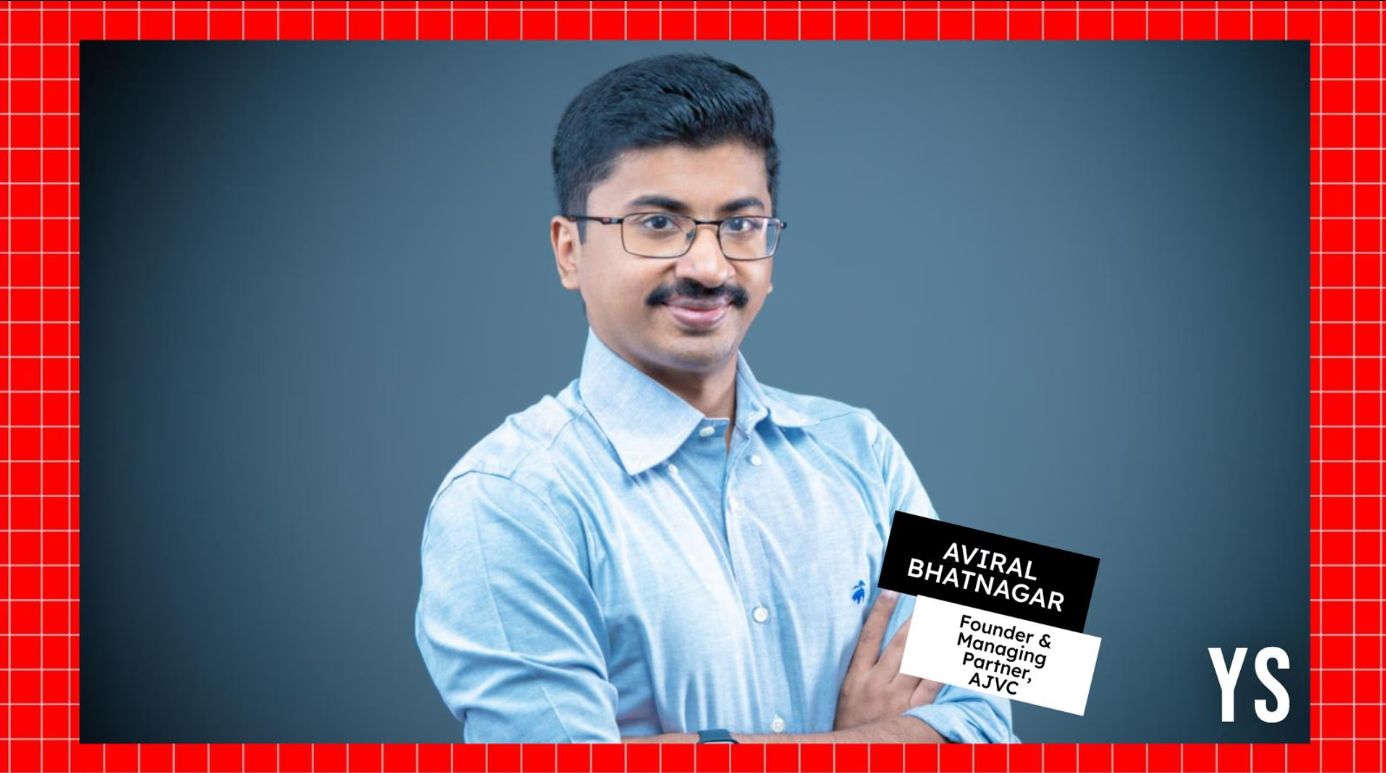
Aviral Bhatnagar Raises Rs 100 Cr in First Fund to Bet on the Pre-Seed Stage: A Deep Dive into A Junior VC’s Ambitions and India’s Thriving Startup Ecosystem
The Indian startup landscape has entered a new era of opportunity, fueled by domestic capital, global investor interest, and a booming culture of entrepreneurship. In the midst of this vibrant ecosystem, A Junior VC (AJVC) has emerged as a notable new venture capital firm, making headlines for surpassing its target corpus of Rs 100 crore in its very first fund. At the forefront of this exciting development is Aviral Bhatnagar, the Founder and Managing Partner of AJVC, who has a keen eye for discovering transformative ideas—especially in the largely untapped pre-seed funding stage.
In an exclusive conversation with YourStory, Bhatnagar revealed how the fund ended up oversubscribed, explained why pre-seed investing in India holds so much promise, and shared his firm’s plans to nurture the next generation of AI-focused, consumer-tech, and SaaS startups. Bhatnagar’s journey, and the rise of AJVC, offer invaluable insights into how micro VCs in India are rewriting the rules of early-stage investing.
This comprehensive, SEO-optimized article unpacks the story in depth—covering everything from the significance of a 100-crore fund in today’s market to why domestic limited partners (LPs) are exhibiting renewed confidence in the Indian startup growth story. Whether you’re an entrepreneur seeking funding, an investor watching the evolving landscape, or simply interested in the mechanics of India’s startup boom, read on for a 360-degree look at what AJVC’s success portends for the future of venture capital in India.
1. Introduction: A Rapidly Evolving Startup Ecosystem
India’s startup ecosystem, now recognized as the third largest in the world, has undergone seismic shifts over the past decade. While the past few years have seen prolific investments in Series A and Series B rounds, the pre-seed stage—which typically finances nascent teams with minimal viable products—often remains underserved. This gap in early-stage capital has constrained many Indian entrepreneurs who possess brilliant ideas but lack the critical first checks to get off the ground.
Simultaneously, the country’s technology and innovation sector has diversified far beyond traditional e-commerce or IT services. Today, entrepreneurs are building startups that delve into emerging frontiers such as artificial intelligence (AI), machine learning (ML), deeptech, software-as-a-service (SaaS), consumer technology, and even space tech. As these sectors continue to expand, the demand for pre-seed capital is only rising, making the environment ripe for micro VCs that can move quickly and offer domain expertise.
In this context, A Junior VC (AJVC) has positioned itself as a key player focusing on the pre-seed stage. Led by the visionary investor Aviral Bhatnagar, AJVC has set a new benchmark by raising a Rs 100 crore fund—impressive for a first fund, especially in a market where caution often trumps boldness.
2. Meet the Man Behind the Fund: Who Is Aviral Bhatnagar?
Before founding AJVC, Aviral Bhatnagar was an investor at Venture Highway, an early-stage investment firm known for its deep connections in Silicon Valley and its knack for identifying disruptive Indian startups. Bhatnagar’s tenure at Venture Highway gave him firsthand experience in backing high-growth companies at the cusp of breakout success.
In June 2024, General Catalyst, a prominent Silicon Valley-based fund, acquired Venture Highway—a move that drew significant media coverage. Shortly before this acquisition, Bhatnagar made a strategic decision to part ways with Venture Highway, setting the stage for his next big venture: A Junior VC. This new chapter was fueled by a conviction that India’s startup ecosystem needed hyper-focused investors who could deploy smaller checks early and guide founders through the labyrinth of product-market fit, team building, and growth.
As Founder and Managing Partner at AJVC, Bhatnagar’s vision is crystal clear: invest in 12-15 companies in the pre-seed stage every year, offering mentorship, domain expertise, and a robust network of resources to accelerate their journey from idea to commercialization. Given his background, Bhatnagar is no stranger to the challenges that early-stage companies face, nor is he short on the optimism needed to bet on unproven but high-potential founders.
3. Inside A Junior VC’s First Fund: Oversubscription and Future Plans
When AJVC announced it was raising its first fund, the plan was to target Rs 100 crore. What followed was an overwhelming response from family offices, high-net-worth individuals (HNWIs), and founders eager to participate. The fund was oversubscribed, prompting AJVC to consider exercising the greenshoe option, which essentially allows the fund to increase its corpus beyond the initially stated target.
“We are seriously considering exercising the greenshoe option given the overwhelming interest in the fund,” said AJVC in an interview with YourStory.
In today’s venture capital landscape, oversubscription signals robust investor confidence. For a debut fund, hitting Rs 100 crore is no small feat; it underscores both the rising appetite for pre-seed investment in India and the trust Bhatnagar has earned among the investor community.
3.1 The Profile of LPs in AJVC
• Domestic Capital: Nearly 90% of the fund’s capital is sourced from domestic investors, a significant shift from previous eras when Indian venture capital was heavily reliant on foreign funds.
• Family Offices and HNWIs: A large chunk of the money comes from family offices in India, which have become increasingly active in the private markets. Many of these offices represent old business families looking to diversify or next-generation inheritors who see startups as a path to robust returns.
• Successful Founders as Investors: AJVC’s LP base also includes founders from leading startups. By bringing in entrepreneurs who have walked the walk, the fund gains not only capital but also real-world experience and networks—an invaluable resource for new founders.
• Long-Term Horizons: According to Bhatnagar, domestic LPs are showing surprising patience, often looking for returns over multiple decades rather than seeking quick exits.
3.2 Balancing Oversubscription and Fund Strategy
While being oversubscribed is a positive signal, it also presents a strategic decision for AJVC. If the fund grows too large, it may no longer be able to deploy capital effectively at the pre-seed stage. Bhatnagar is acutely aware that Indian startups do not always grow to valuations in the tens of thousands of crores, and therefore, the fund size must align with the ability to return capital at a healthy multiple.
“In India, if you are operating at this stage, there is a certain number beyond which it starts becoming a little difficult to return the fund. In my head, that’s about Rs 600 crore,” he said.
At Rs 100 crore (or slightly above if the greenshoe option is exercised), the fund remains in a sweet spot where it can adequately diversify across 12-15 deals annually without the pressure to deploy overly large checks that could distort returns.
4. The Allure of Pre-Seed Investing in India
4.1 Untapped Potential
While seed and Series A investments have become increasingly common in India’s maturing ecosystem, pre-seed funding still represents relatively uncharted territory. This stage is often marked by:
• Small, Nimble Teams: Founders may still be validating the idea, which means minimal overhead and flexible pivots.
• High Risk-High Reward: Because the product or service is barely beyond the concept phase, investing here can be risky, but the upside can be massive if the startup achieves product-market fit.
• Lower Valuations: Pre-seed deals often come with valuations that are more palatable, providing early investors with more equity for relatively small checks.
4.2 Bridging the Funding Gap
Industry analysts point out that many Indian entrepreneurs struggle to find their first institutional investor. AJVC’s approach to investing in about a dozen pre-seed startups every year seeks to plug this gap. By providing not just capital but also hands-on mentorship, the firm aims to bridge the gulf between idea and market validation, setting startups up for success in subsequent funding rounds.
4.3 Growing Community of MicroVCs
AJVC is part of a growing trend. Several MicroVCs have emerged in the Indian market, each specializing in smaller early-stage checks. According to Blume Ventures’ Indus Valley report, microVCs are filling the vacuum left by larger funds that have moved upstream to Series A and beyond. This realignment has opened the door for specialized funds like AJVC, which can focus on pre-seed investments and offer personalized attention to portfolio companies.
5. Sector-Agnostic but With a Tech-Forward Lens
5.1 AI and Beyond
A critical element of AJVC’s strategy is its sector-agnostic approach, which still maintains a strong bias toward technology-driven sectors. Bhatnagar points out that out of the nine investments made so far:
• Five are in artificial intelligence (AI).
• Two are in direct-to-consumer (D2C) brands.
• One is in the B2B space.
• One is in consumer tech.
This portfolio breakdown underscores AJVC’s growing confidence in the power of AI to shape the future of everything from enterprise software to retail experiences.
5.2 Not Building Foundational AI—But Leveraging It
Bhatnagar is quick to note that AJVC is not necessarily looking to back startups building foundational AI models—the kind that require massive data sets, enormous computational power, and correspondingly large capital outlays. Instead, AJVC is more inclined to support startups that build on top of these foundational models, providing specialized applications, functionalities, or unique value propositions.
“A foundational model might be very hard for us to do, given the quantum of our checks. We do 1.5 crores for 9%. That’s our standard,” he noted.
Given the cost and expertise required to build foundational AI from scratch, it makes sense that AJVC would stick to smaller checks and focus on solutions that integrate or adapt existing AI frameworks (e.g., OpenAI’s GPT or Meta’s Llama models). The logic is simple: founders can leverage these powerful underlying technologies without having to reinvent the wheel, making it more capital-efficient and less risky at the pre-seed stage.
5.3 Deeptech, Space Tech, and Beyond
AJVC also sees deeptech as a promising frontier. The team is open to investing in early-stage companies that could be doing something as ambitious as launching satellites or creating cutting-edge hardware prototypes. While these areas require specialized knowledge and longer gestation periods, they also hold the potential for high-impact breakthroughs that can redefine industries.
6. Capital Deployment, Exits, and Investor Expectations
6.1 Deployment Strategy
One of the hallmark features of AJVC’s approach is a steady and patient deployment of capital. With a 10-year-plus fund structure, there is no immediate pressure to invest at a frantic pace. This flexibility allows the firm to:
1. Take the Time to Vet Founders: By not rushing to deploy capital, AJVC can thoroughly evaluate the founding team’s market understanding, technical acumen, and resilience.
2. Exercise Selectivity: The firm invests in only 12-15 companies annually, ensuring each portfolio company gets personalized attention and resources.
3. Support Growth for the Long Haul: AJVC aims to remain engaged with its portfolio companies through multiple funding rounds, offering follow-on capital if needed.
6.2 Approach to Exits
Exits in India can be somewhat elusive, especially at earlier stages. Bhatnagar anticipates AJVC could begin to take money off the table at Series B or Series C stages, depending on the startup’s growth trajectory. The objective is not to exit entirely in one go but to gradually return capital to LPs while still preserving upside potential in the best-performing companies.
“We won’t push companies. If they need, we’ll support them for as long as possible,” Bhatnagar said.
This patient stance resonates with the outlook of many domestic LPs who are willing to wait for longer-term returns. Contrast this with larger global funds, which may face constraints from institutional LPs and seek quicker liquidity events. AJVC’s approach underscores a broader shift in India’s VC environment—toward sustainable growth rather than purely chasing sky-high valuations.
6.3 Domestic LP Sophistication
Bhatnagar’s comments on domestic limited partners highlight an evolving maturity in the Indian investment community. According to him, many Indian LPs now have greater risk appetite and a more nuanced understanding of startup investing than they did a decade ago. Factors contributing to this change include:
1. Successful Exits: Cases like Flipkart’s acquisition by Walmart, and other unicorn exits, have demonstrated that Indian startups can indeed provide hefty returns.
2. Founders-Turned-Investors: As more Indian entrepreneurs achieve liquidity events, they reinvest into the ecosystem, bringing knowledge and trust capital.
3. Market Growth: Public market success for tech companies has also translated into wealth creation for employees and early investors, prompting them to diversify into VC funds.
7. AJVC’s Deal Terms: 1.5 Crores for 9%
One of the most distinctive aspects of AJVC’s strategy is its consistent deal term: Rs 1.5 crore for 9% equity. This uniform approach simplifies and accelerates the negotiation process, aligning expectations on both sides. For founders, this means clarity—there’s no lengthy back-and-forth about valuations or equity splits. For AJVC, it reduces overhead and helps maintain discipline in portfolio construction.
7.1 Why Standardization Works
• Speed: Pre-seed deals often need to close quickly so founders can get back to building. A standardized deal reduces friction.
• Fairness: Founders know upfront what they are getting into, fostering trust.
• Risk Management: By capping the check size, AJVC ensures it can make multiple bets across different sectors without overexposing the fund to any single startup.
7.2 Comparison with Other MicroVCs
While many microVCs in India also operate within a range of small check sizes, AJVC’s explicit 1.5-crore-for-9% model is relatively unique. It is reminiscent of standardized SAFE (Simple Agreement for Future Equity) notes or Y Combinator deals, but calibrated for the Indian market. As more microVCs emerge, the ecosystem might see similar standardization, further streamlining the early-stage fundraising process.
8. The Global and Local Context: 2025 and Beyond
8.1 Post-Pandemic Shifts
It’s March 2025, and the world has moved on from the pandemic era, but its aftershocks still influence how people invest and innovate. Remote work remains widespread, allowing Indian startups to tap into global talent. More importantly, cross-border deals have become commonplace, though Bhatnagar emphasizes that domestic capital is increasingly the bedrock of early-stage funding in India.
8.2 The AI Boom
With generative AI models like OpenAI’s GPT and Meta’s AI Llama capturing headlines worldwide, AI has moved from a buzzword to a cornerstone technology. Indian startups are leveraging these foundational models to build everything from AI-driven educational apps to advanced analytics solutions for healthcare and finance. AJVC’s portfolio reflects this larger trend, with five AI-focused startups already in its fold.
8.3 Tightening Global VC Markets
In certain global markets, venture funding has tightened due to inflation concerns, geopolitical uncertainties, and cautious institutional investors. However, India’s demographic dividend and digital transformation continue to attract a steady stream of capital. The oversubscription of AJVC’s fund stands as one more data point confirming that Indian startups remain an attractive investment proposition.
9. Case Studies: AJVC’s Early Bets
While AJVC has not disclosed the names of its nine investments yet, we can glean insights from the categories they fall into:
1. AI-Driven Enterprise SaaS: Companies that automate back-office tasks, streamline business intelligence, or enhance customer engagement using AI-based tools.
2. Direct-to-Consumer Brands: From health foods to sustainable fashion, these startups are leveraging India’s booming e-commerce ecosystem and the rising trend of conscious consumerism.
3. B2B Platforms: Startups that focus on the India-to-India market—helping SMEs digitize operations, manage supply chains, or optimize logistics.
4. Consumer Tech: Platforms or applications that target everyday consumer needs, such as financial management, edtech, or telemedicine.
As AJVC continues to invest, their portfolio will likely expand into deeptech and other emerging areas. Each of these sectors presents unique challenges but also massive potential in a market as large and dynamic as India’s.
10. What This Means for Founders
For Indian founders, the rise of microVCs like AJVC presents both an opportunity and a challenge. The opportunity lies in the ease of accessing a small, critical amount of capital to jumpstart product development and user acquisition. The challenge, however, is that more funds targeting pre-seed deals will also raise the bar, encouraging founders to present sharper value propositions and robust go-to-market strategies at the earliest stages.
10.1 Speed vs. Due Diligence
While microVCs move quickly, they also perform a high level of due diligence. Founders should be prepared with:
• A clear articulation of the problem they are solving.
• Initial traction metrics, if any (e.g., user sign-ups, pilot program partnerships).
• A realistic financial projection, even if it’s just a rough outline.
• A committed and complementary founding team.
10.2 Mentorship and Network Effects
Another key advantage of microVCs—especially those with accomplished founders as LPs—is access to networks and mentorship. Bhatnagar’s own experience at Venture Highway has cultivated relationships with some of the most influential entrepreneurs and investors in India and Silicon Valley. Founders who join AJVC’s portfolio can tap into this network for guidance, collaboration, and follow-on fundraising.
11. The Road Ahead: Growth, Exits, and Ecosystem Impact
11.1 Exercising the Greenshoe Option
With oversubscription already a reality, AJVC is weighing the benefits of exercising the greenshoe option. While it’s tempting to take on more capital, the firm must remain faithful to its thesis: smaller, more targeted deals that yield significant multiples. Going beyond a certain fund size—Bhatnagar pegs it around Rs 600 crore—could dilute the focus and pose challenges in returning capital with attractive multiples.
11.2 Gradual Exit Strategy
Unlike some funds that push for quick exits, AJVC plans to hold its best bets until at least Series B or Series C—or even beyond, if the upside potential remains compelling. This strategy aligns well with the patient capital ethos many domestic LPs now espouse. It also sets a precedent for more sustainable startup growth, shifting away from the frenzy of immediate expansions fueled by overcapitalization.
11.3 Impact on Indian Startup Ecosystem
The success of AJVC’s first fund could have a ripple effect across the broader ecosystem:
1. Spurring More Pre-Seed Investments: As other microVCs see AJVC’s progress, they might ramp up their own pre-seed programs. This increase in funding options can only help India’s pool of first-time founders.
2. Encouraging Domestic LP Participation: The fact that 90% of AJVC’s capital is from domestic sources signals that India’s wealthy families and HNWIs are keen to diversify into early-stage tech. This trend could make the ecosystem less vulnerable to global market volatility.
3. Strengthening AI Ecosystem: With five AI bets already, AJVC is actively contributing to the development of a robust AI ecosystem in India. These startups could collaborate with universities, corporates, and government bodies, accelerating innovation in this crucial sector.
12. Broader Reflections on the VC Landscape in India
12.1 MicroVCs as the New Frontier
While established funds like Sequoia, Accel, and Lightspeed continue to dominate larger rounds, the real shift in the Indian market has been the proliferation of microVCs. These smaller funds, often helmed by experienced operators or former venture investors, aim to fill the gap between angel funding and the more sizable seed or Series A checks. AJVC’s success in raising Rs 100 crore underscores how much demand there is for dedicated pre-seed capital.
12.2 Collaboration Over Competition
Interestingly, microVCs often collaborate rather than compete. They might co-invest in promising startups, pooling expertise and networks for the founder’s benefit. This collaborative approach can only strengthen India’s startup ecosystem, ensuring that deserving founders receive not just funding but also strategic guidance from a variety of seasoned professionals.
12.3 The Role of Government and Policy
As India’s central and state governments look to foster innovation—through initiatives like Startup India, Digital India, and various sector-specific policies—the environment for new ventures remains encouraging. Tax incentives, regulatory sandboxes, and simplified business processes enable more entrepreneurs to focus on building their products rather than navigating red tape. For VCs, this means a larger pipeline of investable startups and more opportunities to find hidden gems early.
13. Also Read: Ecosystem News and Competitive Landscape
For additional context, consider recent developments that reflect the energy and dynamism of India’s startup landscape:
• Kunal Bahl on Titan Capital’s New Fund: Titan Capital’s approach to encouraging domestic capital parallels AJVC’s strategy, further validating the hypothesis that Indian money is now flowing into Indian startups.
• Former Tiger Global Exec’s Tanglin Venture Partners: Another new fund that aims to raise $250 million, signifying continued interest in the early to growth stage pipeline.
• Blume’s Indus Valley Report: Highlights how microVCs are stepping in at the earliest stages, bridging the gap where larger funds are less active.
These developments underscore a central theme: Indian entrepreneurship is thriving, and the ecosystem is more diverse and robust than ever.
14. Conclusion: Why AJVC’s Rs 100 Crore Fund Matters
The unveiling of A Junior VC’s first fund—oversubscribed at Rs 100 crore—is more than just another funding announcement. It’s a testament to the growing sophistication and confidence of domestic investors, as well as a signal that pre-seed funding in India is coming into its own. Under the stewardship of Aviral Bhatnagar, AJVC is poised to identify and support the next wave of Indian startups, particularly those betting on AI, SaaS, and consumer technology.
In a rapidly evolving market, AJVC’s standardized check size of Rs 1.5 crore for 9%, its patient capital approach, and its willingness to engage deeply with founders set it apart. The firm’s current portfolio of nine investments—spanning AI to consumer brands—demonstrates a deliberate, tech-forward lens that emphasizes innovation, scalability, and real-world problem-solving.
At a time when global macroeconomic trends can cause funding slowdowns, the success of AJVC’s inaugural fund offers a welcome dose of optimism. It highlights that India’s startup ecosystem is not only resilient but also teeming with opportunities for entrepreneurs and investors alike. As the firm contemplates exercising its greenshoe option, the industry will watch closely to see how AJVC’s capital, network, and expertise impact the trajectory of early-stage startups in India.
One thing is clear: the pre-seed stage in India is brimming with potential, and AJVC is right at the forefront, championing the founders who dare to dream big. By plugging the gap in early-stage capital and providing hands-on guidance, AJVC and similar microVCs are empowering a new generation of creators, builders, and innovators. If the next decade is anything like the last, India’s ascendance in the global startup race will continue unabated—with pre-seed funds like AJVC playing an integral role in shaping that future.
Key Takeaways
1. Oversubscribed Fund: AJVC’s first fund crossed the Rs 100 crore target, signaling robust investor confidence in pre-seed investing in India.
2. Domestic Capital Dominance: Around 90% of the fund’s capital comes from within India, showcasing growing faith and sophistication among local LPs.
3. Pre-Seed Focus: AJVC invests at the pre-seed stage with a standard check of Rs 1.5 crore for 9% equity, aiming to support 12-15 companies each year.
4. Sector-Agnostic, Tech-Forward: While sector-agnostic, AJVC leans heavily towards tech-driven startups, especially in AI, SaaS, consumer tech, and deeptech.
5. Patient Capital: With a 10-year-plus fund structure, AJVC aims for exits around Series B or Series C, highlighting a long-term commitment to portfolio companies.
6. Impact on Ecosystem: AJVC’s success may catalyze more microVC activity, encourage more domestic LP participation, and fill gaps in the early-stage pipeline.
